8 November, 2026 | 12:01 AM


No More Distress Sales
08-11-2026 12:00:00 AM
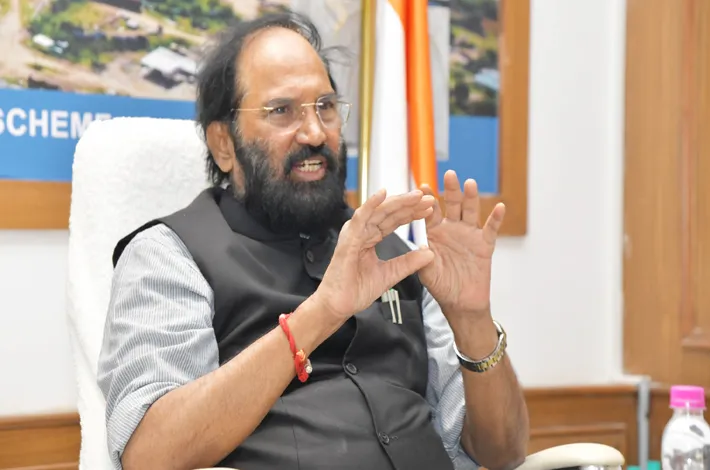
■ Uttam pushes a major modern storage initiative to Put Paddy Farmers in command
■ Two-pronged strategy on cards to put the concept into implementation
■ Modern storage infra to be created with private participation too
■ Scientific storage to curb losses and protect farmers from distress sale
■ Silos to help farmers retain produce till market conditions are favourable.
metro india news I hyderabad : In a major move to shield Telangana farmers from distress sales and post-harvest losses, the State government is working on plans for building a major scientific silo network, said the Minister for Irrigation and Civil Supplies N. Uttam Kumar Reddy on Saturday.
At a review meeting held in the State Secretariat, the Minister discussed two proposed models for establishing the silo infrastructure. Under the first model, the Telangana State Civil Supplies Corporation (TSCSC) would directly establish silos in a big way by mobilising loans from reputed financial institutions.
Under the second model, modern storage capacity would be created through private sector participation. The government would encourage private entrepreneurs to establish silo facilities at around 20 locations to be identified across the State initially, with the Civil Supplies Corporation providing a rental guarantee to make the investments financially viable.
It is aimed at transforming grain storage, preserving quality and helping cultivators secure higher returns from premium paddy varieties. The initiative aims to prevent post-harvest storage losses while protecting farmers from distress sales and enable them to realise better prices for Telangana's increasingly popular premium paddy varieties.
The Minister wanted the proposals finalised expeditiously, including the financial implications, financing arrangements and rental commitments. He wanted possibility of securing institutional finance at competitive interest rates to be explored.
Preventing distress sales
Explaining the importance of the proposed infrastructure, Uttam Kumar Reddy said farmers growing premium varieties of paddy in Telangana were not getting the full value of their produce because of inadequate scientific storage facilities. Freshly harvested paddy generally contains around 25 per cent moisture, making it difficult for farmers to store their produce safely.
Consequently, many farmers are forced to sell their harvest immediately, sometimes within 24 hours, regardless of prevailing market prices. The proposed silo system would provide scientific drying and storage facilities, allowing farmers to preserve their produce for longer periods and sell it when market conditions are favourable.
The Minister pointed out that premium paddy varieties currently fetched around Rs 3,500 to Rs 4,500 per quintal when moisture content was approximately 25 per cent. The same produce, after scientific drying to around 12 per cent moisture, could command prices ranging from Rs 5,000 to Rs 5,500 per quintal.
Telangana emerging as a premium paddy hub
Uttam Kumar Reddy observed that Telangana had emerged as one of the country's leading paddy-producing States, with several locally cultivated varieties gaining recognition in premium rice markets even overseas. Varieties such as JSR, RNR and HMT were increasingly commanding higher market values.
He cited the example of JSR rice, which was fetching relatively higher price in certain markets, compared with the basmati rice. The growing popularity of Telangana's premium varieties made it imperative to modernise the State's storage infrastructure and ensure that farmers benefited from the higher market value of their produce.
Towards $ 3-trillion economy
The Minister noted that paddy was the single largest crop cultivated in Telangana during both Kharif and Rabi seasons. Strengthening its storage and value realisation would contribute significantly to agricultural growth, increase the State's GDP and support Telangana's ambition of becoming a $3-trillion economy.
He stressed the need to move away from conventional storage practices towards modern, scientific systems capable of preserving the quality and market value of paddy.