8 November, 2026 | 12:01 AM


Your Apps Knows More Than You Think
08-11-2026 12:00:00 AM
The Hidden Price of Free Apps and What Young Users Should Check
Free Apps, Hidden Costs: How Much of Your Personal Life Is Online?
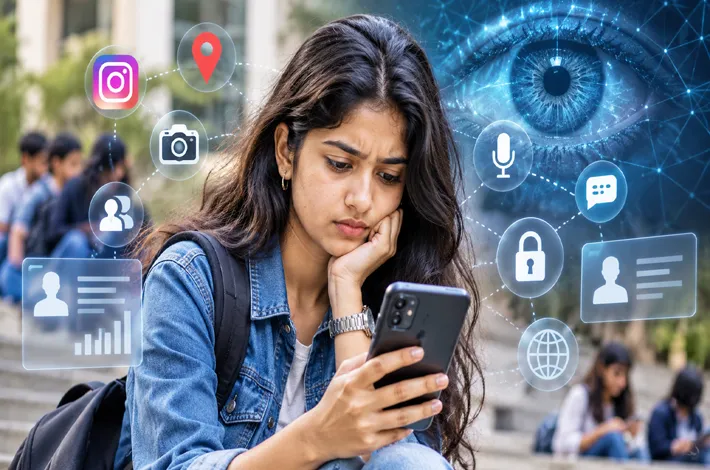
hema singuluri | Hyderabad : Free apps may not charge users at the time of download, but the price could be paid in personal information, attention and time. From location details and browsing habits to photographs and social connections, everyday applications collect information that can help build detailed profiles of their users.
As India observed October as National Cyber Security Awareness Month, the focus has increasingly shifted towards making digital safety part of everyday life. CERT-In adopted the theme ‘Build a Culture of Cyber Hygiene’, while the Data Security Council of India (DSCI), through its pan-India ‘Be Cyber Street Smart’ campaign, highlighted risks involving digital payments, email and app security, social media and AI-powered scams.
The data trail users leave behind
Every online search, purchase, location check and social media interaction adds to a user's digital footprint. Apps may collect location, device details, browsing history, preferences and usage patterns, sometimes accessing contacts and photos. Companies analyse this data through tracking and sharing arrangements to target advertisements, personalise recommendations and infer shopping habits, income brackets and other characteristics, though such profiles may be inaccurate.
The cost goes beyond privacy
The consequences are not limited to data exposure. Features such as endless scrolling, personalised feeds and frequent notifications encourage users to spend longer periods on applications. A 2026 systematic review published in European Child and Adolescent Psychiatry, examining 42 studies involving 46,912 participants, found associations between heavy, unstructured short-video use and attention, memory and emotional well-being concerns among young people. Researchers, however, noted that further long-term studies are needed.
Late-night scrolling can also eat into sleep time, affect concentration and interfere with everyday relationships. While social media offers opportunities for learning, communication and entertainment, excessive use can make it difficult to maintain a healthy balance.
Three checks every young user should make
The first step is to review app permissions on the phone. Location, microphone, camera, contacts and photo access should be restricted wherever they are not essential. Users should also avoid downloading applications from unfamiliar links or unverified sources.
Second, social media privacy settings need regular attention. Instagram users can visit Accounts Centre and review information-sharing and activity controls, including activity from other websites and apps. They should also check who can view their posts, stories and personal details.
Third, users must examine what they share publicly. Photographs, college details, travel plans, live locations and daily routines can be misused for impersonation, identity theft, stalking and targeted scams. Parents should pay attention to children's online activities, including gaming platforms, rather than monitoring screen time alone.
Privacy as a digital life skill
Digital privacy deserves a place in school and college cybersecurity education alongside phishing awareness, password protection and responsible online behaviour. Free applications are not automatically unsafe, but users must understand the terms on which they access them. In a connected world, protecting personal information is as important as protecting a bank account.