22 September, 2026 | 5:14 PM


Push for mega-mergers as banking sectors eyes global dominance
04-01-2026 12:00:00 AM
As India strides into a new year with ambitious economic goals, a growing chorus of voices from within the financial sector is advocating for large-scale bank mergers to propel domestic lenders onto the global stage. At the heart of this discussion is the State Bank of India (SBI), the nation's undisputed leader, which boasts the largest market share in deposits and loans but lags far behind international behemoths. Despite its dominance at home, SBI ranks 43rd among the world's largest banks by total assets, underscoring the need for bolder reforms to create entities that can rival giants like China's Industrial and Commercial Bank of China (ICBC) and Agricultural Bank of China, which hold the top two spots globally. Industry experts and policymakers argue that merging four to five public sector banks (PSBs) into single, mammoth units could bridge this gap, positioning a new "super bank" as a close second to SBI domestically while enhancing India's footprint in the international arena.
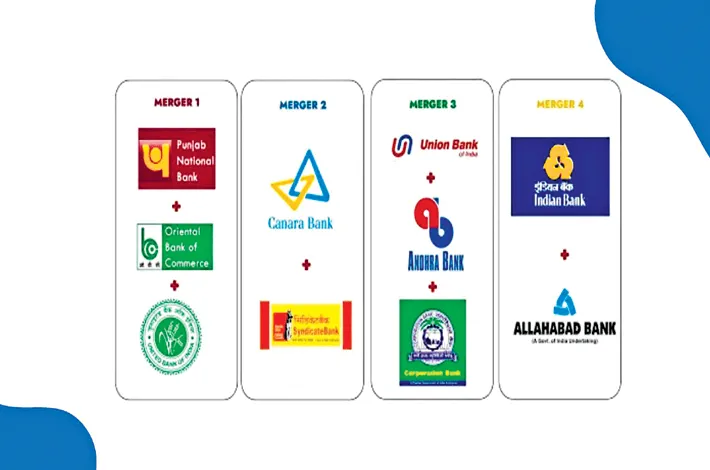
This proposal builds on a wave of consolidations over the past decade, where fragmented nationalized banks were amalgamated to streamline operations and bolster financial health. Proponents believe such moves are essential for operational efficiency, faster credit disbursement, and technological upgrades in an era dominated by artificial intelligence (AI) and digital banking. The roots of this merger momentum trace back to 2017, when SBI absorbed its five associate banks—State Bank of Bikaner and Jaipur, State Bank of Hyderabad, State Bank of Mysore, State Bank of Patiala, and State Bank of Travancore—along with Bharatiya Mahila Bank. This created a colossus with assets exceeding $500 billion at the time, setting a precedent for efficiency gains. The trend accelerated in 2019 with the merger of Bank of Baroda, Dena Bank, and Vijaya Bank, followed by a major overhaul in 2020 that reduced the number of PSBs from 27 to 12. Key fusions included Punjab National Bank (PNB) combining with Oriental Bank of Commerce and United Bank of India; Canara Bank absorbing Syndicate Bank; Union Bank of India merging with Andhra Bank and Corporation Bank; and Indian Bank integrating Allahabad Bank.
These mergers, orchestrated under the guidance of the Reserve Bank of India (RBI) and the central government, aimed to address issues like non-performing assets (NPAs), capital shortages, and overlapping branch networks. By 2025, reports suggested that these consolidations had improved asset quality and profitability for the merged entities, with PNB, for instance, reporting a 15% rise in net interest margins post-merger. However, critics point out that India's banking landscape remains fragmented compared to global peers, where scale enables massive investments in innovation.Advocates for further mergers highlight a slew of advantages. Foremost is the leap in operational efficiency. A consolidated bank could operate with up to 50% fewer employees by leveraging AI for routine tasks like customer verification, fraud detection, and loan processing. This isn't just cost-cutting; it's about reallocating human resources to high-value areas like advisory services. "In a merged setup, banks can invest heavily in AI and machine learning, transforming customer experiences," said a senior banking analyst at a Mumbai-based think tank, who requested anonymity. Branches, often duplicated every few kilometers in urban areas, could be rationalized to one per locality, freeing up capital for digital infrastructure. A key benefit touted is the acceleration of big-ticket loans. Currently, securing a Rs 1,000 crore ($120 million) credit line often requires approaching a consortium of banks, entangling borrowers in bureaucratic red tape that can stretch from six months to a year. A larger, unified entity could slash this to 30-40 days with streamlined paperwork, thanks to centralized decision-making and enhanced risk assessment tools.
This would be a boon for infrastructure projects, renewable energy initiatives, and corporate expansions, aligning with India's target of becoming a $5 trillion economy by 2027. The RBI has already laid the groundwork for such voluntary amalgamations. In late 2025, the central bank issued the RBI (Commercial Banks – Voluntary Amalgamation) Directions, 2025, which streamline the process once bank boards approve proposals. These guidelines emphasize governance, shareholder protections, and post-merger stability, allowing banks to merge without mandatory regulatory intervention if they meet capital adequacy norms. Additionally, RBI's draft norms from October 2025 permit banks to fund up to 70% of merger and acquisition deals, with a 10% cap on such exposures relative to core capital—though banks are lobbying to double this to 20% amid a surge in M&A activity. Government support is crucial, experts say. The Centre, which owns majority stakes in PSBs, could expedite approvals to forge a second powerhouse akin to SBI. Speculation is rife about potential candidates: perhaps clustering banks like Bank of Baroda, Union Bank, and Indian Bank into one unit, or merging smaller players like Bank of Maharashtra and Central Bank of India with larger ones. Such a "Merger 2.0" could reduce PSBs to just four or five by 2027, as per recent reports, enhancing global competitiveness.
However, challenges loom. Employee unions have historically resisted mergers, fearing job losses—over 100,000 positions were rationalized in the 2020 wave alone. Customer disruptions, such as account migrations and branch closures, could erode trust if not managed well. Moreover, while Chinese banks benefit from state-backed scale, India's diverse regional needs demand careful integration to avoid alienating rural customers.SBI itself, recently crowned the World's Best Consumer Bank for 2025 by Global Finance, exemplifies the merger model's success with its digital prowess and 27.7% market share in home loans. But to challenge the top 10—dominated by four Chinese, three U.S., and others from Europe and Japan—India needs more than one titan. As Finance Minister Nirmala Sitharaman prepares for the upcoming budget, the merger debate could gain traction. "Creating a second SBI-like entity isn't just about size; it's about efficiency and innovation," noted a former RBI official. With the economy rebounding post-pandemic, 2026 might witness the next chapter in India's banking evolution, turning domestic lenders into global contenders.