23 October, 2026 | 3:22 PM


Tanno Varunah Prachodayat
11-08-2026 12:00:00 AM
metro india news I Nagarjuna Sagar
Long before the morning sun touched the waters of the Krishna, the silence enveloping Nagarjuna Sagar was broken by the solemn chanting of Vedic hymns invoking Lord Varuna, the deity of rains and waters, to shower his blessings upon Telangana.
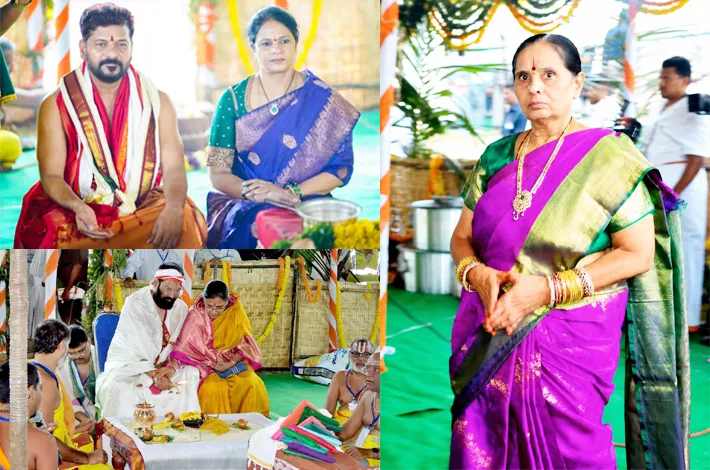
At Vijay Vihar on the banks of Nagarjuna Sagar, the Maha Varuna Yagam began in the sacred hours of Brahma Muhurtham on Monday, bringing together 108 Ruthviks, Vedic scholars and priests in a collective prayer for rain, flowing rivers, brimming reservoirs and prosperity for farmers.
Irrigation and Civil Supplies Minister N. Uttam Kumar Reddy, accompanied by his wife and Kodad MLA, Padmavati Uttam Kumar Reddy, presided over the early rituals as the priests prepared the Yagashala for the day-long invocation. The ceremony began with Chaturveda Pathanam — recitation from all four Vedas: the Rigveda, Yajurveda, Samaveda and Atharvana Veda.
Thirty-two Ruthviks took their designated places around the Yagashala for the principal rituals, while the remaining members of the 108-member group joined in continuous Vedic chanting and japam. As the recitation gathered momentum, the atmosphere on the banks of the Krishna turned deeply devotional.
The Chaturveda Pathanam was followed by Agni Pratishthapana, the ceremonial consecration of the sacred fire. Offerings were then made into the Homa Kundams amid the rhythmic chanting of mantras invoking Varuna and seeking harmony between the skies, rivers, earth and humanity.
For those conducting the Yagam, its location carries a special historical resonance. Priests associated with the ceremony said the present-day Nagarjuna Sagar region, historically associated with Vijayapuri, had witnessed the worship of Varuna in ancient times. They referred to an ancient image associated with Varuna, now preserved in the Nalgonda museum, as testimony to the antiquity of such worship in the region.
According to the priests, this historical connection gives the present Maha Varuna Yagam an added spiritual dimension — an ancient invocation for water being revived on the banks of the Krishna after centuries. Among those leading and coordinating the Vedic rituals are scholars and priests associated with the Yadagirigutta Sri Lakshmi Narasimha Swamy Devasthanam, including principal priest Acharya Venkatacharyulu, along with Naresh Sharma, Venkata Rama Sharma, Aditya Sharma and other Vedic scholars.
The prayers extend beyond Nagarjuna Sagar, seeking widespread and evenly distributed rainfall across Telangana and abundant rains in the upper Krishna and Godavari catchments of Karnataka and Maharashtra. The Sankalpam seeks sustained river flows into the State, replenishment of reservoirs and village tanks, groundwater revival, protection of kharif crops and prosperity for farmers.
The invocation gains significance amid an uneven monsoon and concerns over rainfall. While engineers monitor reservoir levels, river discharges and irrigation needs, the Vedic appeal is directed towards the ultimate source of water—the skies. Metro India MD C Vijaya Rajam also participated.
CM Revanth, wife participate in concluding rituals
Purnahuti marked the culmination of maha varuna yagam at Nagarjuna Sagar with Telangana CM Revanth Reddy and his wife Geeta Reddy participating in concluding rituals bringing to a close an elaborate Vedic invocation for bountiful rains. The Purnahuti — the final and complete offering into the sacred fire — brought the elaborate ritual that had commenced in the early hours today to its ceremonial conclusion.
Throughout the day, 108 Ruthviks, Vedic scholars and priests conducted the prescribed rituals at the Yagashala set up at Vijay Vihar on the banks of the Nagarjuna Sagar reservoir. The ceremonies began with Chaturveda Pathanam, the recitation of hymns from the Rigveda, Yajurveda, Samaveda and Atharvaveda. This was followed by Sankalpam and a series of Vedic rituals invoking Varuna, the deity associated with waters and rains.
All about Varuna Yagam
Varuna Yagam, also called Varuna Homam or Yajna, is a Hindu fire ritual invoking Lord Varuna, the deity associated with waters, oceans, rivers and rainfall, seeking timely, adequate rains, especially during droughts or deficient monsoons. Because rain sustains agriculture and prosperity, communities historically performed rituals to propitiate rain deities during dry spells. Indra, associated with storms and thunder, may also be invoked.
The ritual draws on Rigvedic hymns, particularly the Varuna Sukta, and the Vedic belief that properly performed yajnas can influence natural forces and support rainfall. It begins with preparatory rites: purification (punyahavachanam), invocation of Ganesha to remove obstacles, and a sankalpa stating the purpose—abundant rains without calamities, replenished water bodies, healthy livestock, good harvests and welfare.
A sacred fire (homa kundam) is kindled according to Vedic prescriptions. Priests offer ghee, grains, herbs and other materials while chanting Varuna mantras, including Varuna Japam, and Vedic texts. Associated rites may include Rishyasringa Homam or Aaradhana, invoking the sage linked in mythology with bringing rains; Rudra Homam; Sudarshana Homam; and abhishekams, ritual bathing of deities or icons with water, milk or other substances. Grand ceremonies may include Sahasra Ghatabhishekam, involving a thousand consecrated water pots. Kalashas symbolize abundance and desired rainfall.
Mantras from multiple Vedas may be recited. It may last hours or several days, culminating in Purnahuti, the offering. Trained ritwiks (Vedic priests) conduct it precisely. Locations may include temples, riverbanks, reservoirs and dams. Today, temple authorities, communities and state governments organise Varuna Yagams, particularly in Andhra Pradesh and Telangana. Examples include multi-day events at Srisailam with Sahasra Ghatabhishekam, and performances near dams such as Nagarjunasagar involving over 100 priests, seeking inflows for agriculture.
Its efficacy is rooted in traditional cosmology: offerings are believed to reach the divine realm and encourage rain. Ancient texts connect yajna with rain and food. Other practices include standing in water while chanting Varuna mantras, reciting texts believed to have potency for rain, community processions and offerings, and music in ragas believed to invoke rain.
While science attributes rainfall to atmospheric conditions, pressure systems and climate patterns, Varuna Yagam remains culturally significant as devotion, communal hope and continuity with Vedic heritage. It brings devotees and priests together in prayers for peace, prosperity and environmental balance, reflecting Hinduism’s historical connection between ritual, nature and dependence on seasonal rains. It continues whenever dry conditions prompt communities to seek divine intervention through Vedic practices.
El Niño Threat
Irrigation and Civil Supplies Minister N. Uttam Kumar Reddy on Monday said the Telangana Government was combining spiritual, administrative and water-management measures to address the possible impact of El Niño on monsoon rainfall. He said the Varuna Yagam on the Krishna banks was being performed for good rains across Telangana, healthy Krishna and Godavari flows, replenished reservoirs and tanks, and a prosperous agricultural season.
Uttam Kumar Reddy said emerging El Niño conditions were a concern as they could affect rainfall in the coming months.
“Every drop of water has to be used carefully,” he said, stressing that protecting farmers’ interests and ensuring water availability through the agricultural season were priorities. He said sustained rainfall in the Krishna and Godavari catchments was crucial, while the Government was monitoring rainfall, inflows, reservoir storage and irrigation needs. Farmers would be advised on cropping patterns based on water availability. The Government’s approach, he said, was to pray for a good monsoon while preparing prudently for possible rainfall shortages.
After 1800 years, Vedic chants echo on Krishna Banks
Nearly 1,800 years after the Ikshvakus made Vijayapuri a centre of Vedic ritual and learning on the banks of the Krishna, the ancient landscape resonated with Vedic chants again on Monday.
The location offered a remarkable link to history. Between the third and fourth centuries CE, Vijayapuri, associated with present-day Nagarjunakonda and the Nagarjuna Sagar region, was the capital of the Andhra Ikshvakus. Inscriptions and archaeological evidence testify to their patronage of Vedic traditions and major religious ceremonies, even as the city emerged as a significant centre of Buddhism.
Centuries later, much of ancient Vijayapuri lies beneath the Nagarjuna Sagar reservoir, while the Krishna continues to flow through the historic landscape.
As sacred fires burned and hymns rose over the Krishna, the ceremony bridged two distant eras — the Vedic traditions of ancient Vijayapuri and Telangana’s present-day prayers for water and agricultural prosperity.
INTERESTING FACT
A statue of Lord Varuna believed to be worshipped by Ikshavakus, now it Panagal museum at Nalgonda!