23 October, 2026 | 3:59 AM


The Creator Economy Boom Among India’s Gen Z
06-09-2026 12:00:00 AM
metro india news I hyderabad
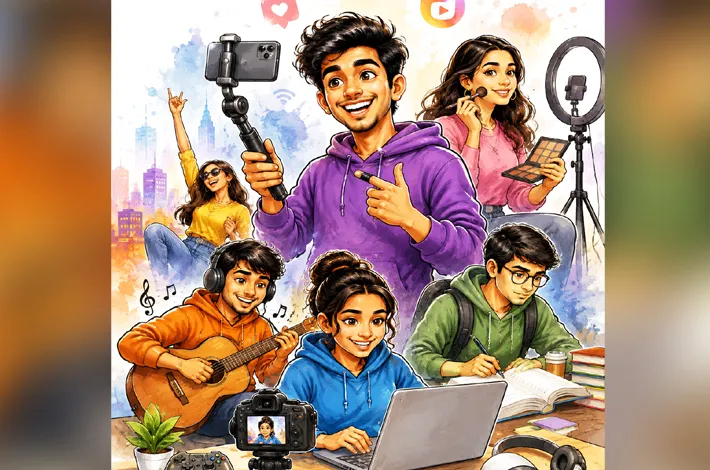
India’s Gen Z, roughly those born between the late 1990s and early 2010s, has turned content creation into a mainstream career path and cultural force. Surveys show that 83 percent of Gen Z respondents identify as content creators, with many producing reaction videos, fan edits, study logs, lifestyle reels, and niche community content. Platforms such as Instagram Reels, YouTube Shorts, and others drive this shift, where daily engagement among Gen Z reaches 89 percent on Reels alone.Urban youth aged 18-24 spend over 120 minutes daily on social media, well above the overall average of about 98 minutes. This time fuels discovery and production. Beauty and makeup, fashion and trends, lifestyle and fitness, comedy, and sports rank among the top categories for engagement.
Nearly 84 percent of Gen Z discover new products and brands through short-form video platforms, making creators central to consumer influence.The numbers reflect broader economic weight. Gen Z already drives or influences hundreds of billions in spending, with projections showing their influence growing substantially by the early 2030s. Many view creative work as a viable livelihood rather than a side hustle. Career counsellors report that a majority of students they meet express interest in influencer or creator paths, including those in traditional professional courses. Some leave stable jobs or adjust studies to focus on building audiences and brand collaborations.
Fan culture merges with creation. Around 87 percent of Gen Z identify as fans of something or someone, and 91 percent participate in fan activities such as edits, art, discussions, or secondary content. YouTube remains key for deeper engagement, with high weekly use for content around interests. Brands that join communities rather than advertise from outside gain preference from 80 percent of Gen Z fans.Geographic spread matters. While metros remain strong, Tier-2 and Tier-3 cities contribute rising numbers of creators. Content often mixes local languages, cultural references, and global trends, creating authenticity that resonates.
Government recognition of animation, visual effects, gaming, comics, and digital content as employment drivers supports this sector, with projections of significant professional demand by 2030.Challenges exist. Monetisation remains uneven, and visibility depends on algorithms. Consistency demands time and skill development in editing, storytelling, and audience interaction. Many combine creation with education or freelance work. Success stories range from lifestyle influencers securing brand deals to niche creators building specialised communities around finance tips, regional culture, or skill-sharing.Technology accelerates the trend.
Generative AI tools help with scripting, editing, and idea generation, used regularly by large shares of young people for learning and content tasks. Affordable smartphones and expanding internet access, reaching over a billion users in India, lower barriers further.This generation treats creation as both self-expression and economic opportunity. They remix trends, build communities, and influence family purchasing decisions. As platforms evolve and skills training expands, the creator economy continues reshaping how young Indians work, connect, and shape culture. Data consistently points to sustained growth in participation and impact across urban and smaller-city landscapes. The shift signals a preference for flexible, visible, and purpose-aligned work over purely traditional paths. With high identification rates as creators and strong platform engagement, Gen Z positions itself at the centre of India’s digital entertainment and influence landscape.
Mental Health Pressures Facing India’s Young Adults
Indian young adults aged 18-34 face notable mental health challenges, as shown by recent global and domestic data. In the Global Mind Health 2025 report covering over a million respondents across 84 countries, this group scored an average Mind Health Quotient of 33, ranking 60th and falling into the “Distressed or Struggling” category. Older Indians aged 55 and above scored near 96, ranking 49th and aligning closer to expected functional levels.Family closeness plays a role. About 64 percent of the younger group reported close family ties compared to 78 percent among seniors.
Those with weaker family relationships showed nearly four times higher likelihood of distressed categories. Ultra-processed food consumption stood at 44 percent among young adults versus 11 percent for older groups. Average age of first smartphone access in India was around 16.5 years, with earlier exposure linked to attention and coping differences in broader research.Student surveys reinforce the picture. One study of over 1,600 higher-education students in Tier-1 cities found moderate to high anxiety in nearly 70 percent, depression in about 60 percent, and overall distress in over 70 percent. Female students often reported higher levels. Another nationwide pulse of more than 8,000 high-school students indicated that nearly one in five rarely felt calm, motivated, or excited.
Sleep issues connected to passive social media scrolling affected many, with late-night use linked to lower life satisfaction. Academic pressure and career uncertainty ranked as leading stressors. Around 40 percent did not know where to seek professional help in school settings.Post-pandemic comparisons of adolescent data showed rises in suicide attempts, suicidal ideation, and self-harm between earlier and later surveys. Emotional problems, bullying (including cyber), and urban residence associated with higher odds. Protective factors included feeling safe at school and prosocial behaviour.Social media forms part of the environment. High daily usage among youth coincides with incidental news consumption and constant comparison. Platforms deliver both connection and pressure.
Stigma continues to limit help-seeking, with treatment gaps remaining substantial for common conditions.Positive counters appear. Awareness campaigns grow, and young people discuss stress, boundaries, and emotional health more openly than previous generations. Closeness to family still buffers well-being for many. Institutions expand counselling, while digital tools and peer communities offer additional support routes. Some data note higher positivity in certain regions or educational settings.Lifestyle factors such as screen time, diet, and sleep patterns interact with academic and job-market pressures. Housing affordability and living expenses affect career choices for significant shares of Gen Z and millennials.
Purpose and values alignment matter strongly for job satisfaction among Indian youth cohorts.Addressing the gaps requires broader access to services, reduced stigma, school-based guidance, and family engagement. Research consistently highlights the generational difference in scores and the role of modern lifestyle elements. Young Indians navigate high connectivity alongside these pressures, with data underscoring the need for sustained attention to mental well-being metrics.The combination of ranking data, student surveys, and behavioural associations paints a clear picture of elevated challenges that call for practical responses across education, family, and health systems.
Entrepreneurship and AI Adoption
Powering India’s Youth AmbitionsIndia’s startup ecosystem continues rapid expansion, with strong participation from younger founders and high AI integration among Gen Z. In FY 2025-26, the government recognised more than 55,200 new startups, the highest annual figure, bringing the cumulative total past 2.23 lakh. These ventures generated over 23 lakh direct jobs overall, with substantial year-on-year increases in both recognition and employment.Younger entrepreneurs feature prominently. Lists of under-35 founders highlight dozens of leaders whose companies collectively hold large valuations and employ hundreds of thousands.
First-generation founders dominate many such rankings. Average founder ages in recent quarters hover near 30. Women co-founders appear in growing shares of new teams. Student-led startups show rising sophistication, with deep-tech categories expanding and activity spreading beyond traditional hubs into additional cities.AI adoption stands out. Deloitte’s India Gen Z and millennial survey found 93 percent of Gen Z and 95 percent of millennials use AI in daily work, with over 90 percent reporting positive professional and personal impacts. Separate data indicate around 82 percent of Gen Z use AI or generative tools weekly for homework, coding, career skills, document work, and content tasks. Generative AI startups multiplied rapidly in number, though funding growth trailed the expansion in count.Purpose and values rank high. Nearly all surveyed Gen Z and millennials in India view a sense of purpose as important for job satisfaction, with many feeling their roles allow meaningful contribution. Leadership interest remains strong, tempered by considerations of balance and trade-offs.
Housing costs influence career decisions for over 60 percent of these cohorts. Financial attitudes lean toward stability, savings, and steady investments alongside flexibility.Geographic diversification progresses. Tier-2 cities account for rising shares of new incorporations. States such as Maharashtra, Karnataka, Uttar Pradesh, and others host large numbers of recognised startups and associated jobs. Patent filings by startups increased, signalling deeper technology focus. Government schemes provide seed funding, credit guarantees, and procurement access that support broader participation.
Challenges include selective funding environments, where deal numbers tightened even as certain sectors like deep-tech and AI maintained interest. Transition from seed to later stages presents gaps for many. Still, new formation remains robust, and hiring demand concentrates in AI, machine learning, and product roles.Gen Z approaches work with emphasis on alignment and tools that enhance productivity. High confidence in AI use pairs with interest in creative and entrepreneurial routes.