23 October, 2026 | 12:29 PM


Trump faces, Modi dodges
25-08-2026 12:00:00 AM
India Sought No-Question Format for Modi-Trump Meeting
metro india news I New Delhi
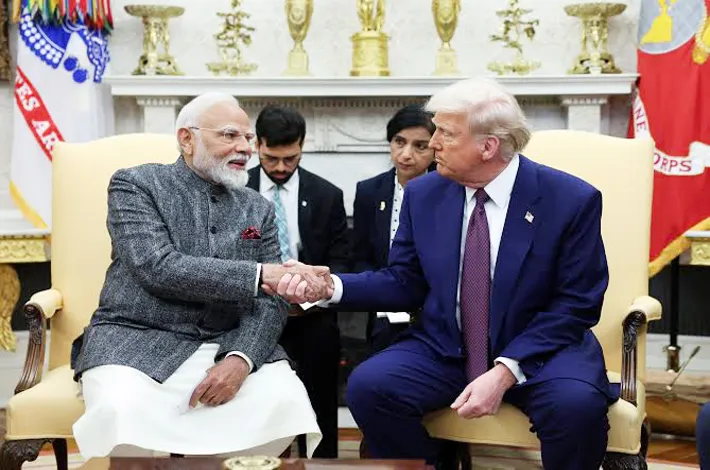
United States Ambassador to India Sergio Gor on Saturday said Indian officials had specifically requested that journalists not be allowed to ask questions during Prime Minister Narendra Modi’s bilateral meeting with US President Donald Trump on the sidelines of the G7 summit in France in June. Trump initially agreed but later invited reporters to ask questions, turning the meeting into an extended press interaction lasting about 45 minutes, during which Modi remained largely silent.
Speaking at the World Leaders Forum in New Delhi, Gor recalled preparations for the June 17 meeting in Evian-les-Bains. He said Trump had asked what Indian officials planned to raise and whether they had any specific requests. According to Gor, the Ministry of External Affairs (MEA) wanted media present for the leaders’ opening remarks but opposed a full press conference.
“I told the president, I said, the Indians prefer no questions. He said, sure, no problem,” Gor said.
The meeting began with around 50 cameras present as Modi and Trump delivered brief opening statements. Modi reportedly read from a prepared text. Trump then turned to journalists and asked, “Any questions?” Gor said the query “opened everything up”, transforming the planned limited interaction into a nearly 45-minute press conference in which “everything was on the table”.
Reporters directed most questions to Trump, while Modi, seated beside him, did not respond. One question concerned bilateral relations, with Trump responding that as long as his “friend” Modi remained in office, India would receive what it needed.
Gor’s remarks have drawn attention to Modi’s longstanding preference for controlled media engagements. The Prime Minister rarely holds unscripted press conferences, particularly during foreign visits, unlike Trump, who frequently engages reporters in lengthy and spontaneous exchanges.
Indian government sources on Monday described the MEA’s request as routine diplomatic protocol. “Discussions regarding arrangements for public appearances of leaders are normal practice ahead of any VVIP visit,” the sources said, adding that India had communicated its standard practice for such engagements.
The June 17 meeting was an important early face-to-face engagement between Modi and Trump during the latter’s second term, amid efforts to strengthen the India-US strategic partnership in trade, technology, defence and regional security. While the interaction went beyond the originally planned format, it allowed Trump to make positive statements about bilateral ties.
Gor’s account offers rare insight into the protocol negotiations preceding high-level summits, where officials routinely discuss logistics, optics and media access. The episode also highlights contrasting leadership styles: India generally favours structured engagements and prepared remarks, while Trump often embraces open-ended interactions with reporters.
The ambassador’s disclosure has prompted discussion about diplomatic protocol, media access and leadership styles, but is unlikely to alter the broader India-US relationship. Instead, it illustrates how carefully choreographed summit engagements can change in real time when leaders adopt different approaches to the press.