20 September, 2026 | 8:53 PM


Violence Has No Gender, Neither Should Our Concern
20-07-2026 12:00:00 AM
Metro India News | Hyderabad
Every few months, a gruesome crime within an intimate relationship dominates the headlines. This time, it is Ketan Aggarwal's murder and the Ekam Nyaay Foundation's report documenting over 550 cases of husband murders and suicides in just over six months of 2026. The figures are disturbing. Every life lost is a tragedy, and every family is scarred forever.
What is equally predictable is the reaction. Before the facts are fully absorbed, social media erupts. The conversation quickly shifts from the crime itself to feminism, women's empowerment and gender equality. The incident becomes another opportunity to pit men against women.
That is a mistake.
The report deserves to be taken seriously. Violence against men is real. Men can be victims of domestic abuse, emotional violence, coercive control and sustained harassment. They deserve to be heard, protected and supported. A civilised society cannot decide who deserves justice based on gender.
But neither should these incidents be viewed in isolation. Official data continues to show that violence within intimate relationships remains one of India's most serious social challenges. According to the National Crime Records Bureau, 4,41,534 crimes against women were registered in 2024. Cruelty by husbands or their relatives remained the largest category, accounting for 1,20,227 cases, or over 27% of all crimes against women. That translates to nearly 330 women reporting abuse within their homes every day.
Even these numbers tell only part of the story. NFHS-5 reminds us that domestic violence remains grossly underreported. Nearly one in three ever-married women reported experiencing violence by their husbands, yet only 28% sought help and most never approached the police. The true extent of abuse, whether against women or men, is therefore likely to be far greater than crime records suggest.
These statistics do not diminish the suffering of male victims. They simply remind us that violence within intimate relationships has never been a problem affecting only one gender. Murder remains murder. Abuse remains abuse. Justice cannot have two standards.
What is worrying is the attempt to use every crime committed by a woman as proof that feminism has failed. Women's liberation is blamed for broken families. Gender equality is portrayed as a licence for violence. This distorts the meaning of feminism and undermines decades of work by women and men who fought for equal dignity, opportunity and rights.
No school of feminist thought advocates violence against men. Feminism challenged unequal power, not the humanity of men. Criminal acts arise from individual choices and social failures, not from an ideology whose central premise is equality. Using isolated crimes to discredit an entire movement only distracts us from the real issue: preventing violence wherever it occurs.
Perhaps we are asking the wrong question.
Instead of asking why women are becoming violent, we should ask why violence itself appears to be becoming more acceptable. Television channels compete for sensational headlines. Social media circulates gruesome details within minutes. We know how someone was poisoned, strangled or dismembered, but rarely hear about what followed—the years in prison, children growing up without a parent, elderly parents watching families collapse and lives permanently destroyed. The crime does not end when the victim dies.
The deeper problem lies elsewhere. We have become remarkably successful at educating children for careers but not for relationships. We teach mathematics, science and technology, but very little about communicating with respect, resolving conflict, accepting rejection or seeking help when relationships turn abusive. Emotional literacy remains the missing subject in our classrooms.
Nor have we made it easy for people to leave unhappy marriages. Fear of social judgement, concern for children, family pressure, financial insecurity and the lack of confidence to rebuild life often keep people trapped in deeply dysfunctional relationships. Some endure years of abuse. Others eventually reach breaking point, with tragic consequences.
The Ekam Nyaay Foundation report should therefore not become another chapter in the endless battle between men's rights and women's rights. It should remind us that violence within intimate relationships affects families and society as a whole. Male victims deserve recognition. Female victims deserve protection. Neither truth cancels the other.
If there is one lesson to draw from this debate, it is this: violence has no ideology and no gender. It thrives wherever empathy declines, relationships break down and people lose the ability to resolve conflict without force. Until we value empathy as much as material success, dialogue as much as dominance and emotional resilience as much as ambition, we will continue to count victims, regardless of gender.
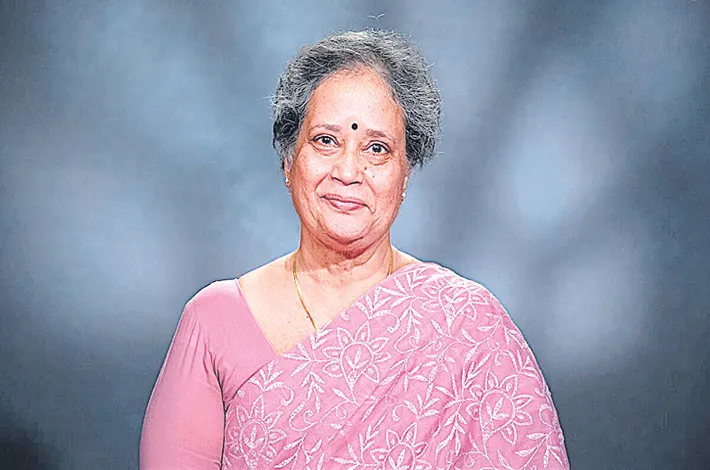
– Dr. A. L. Sharada,
Trustee and Former Director, Population First