24 October, 2026 | 5:55 AM


ADVANTAGE ADANI
30-08-2026 12:00:00 AM
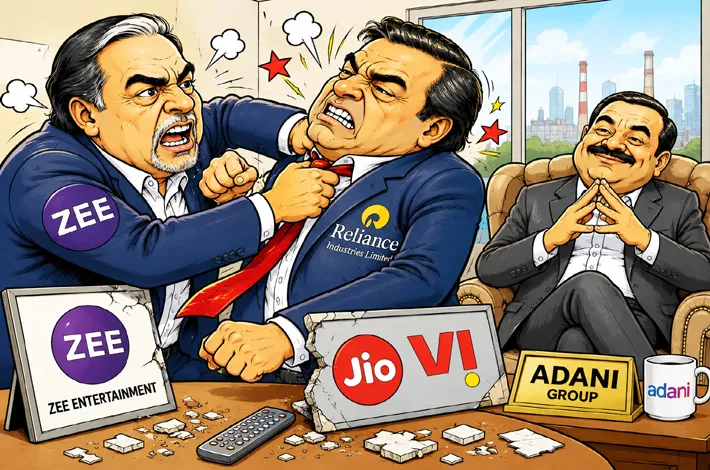
Subhash Chandra Vs Mukesh spat!
- Subhash Chandra’s NCLT Storm Sparks Clash with Mukesh Amani
- Gautam Adani Watches Corporate Titans Collide
Two titans fight, third gains ground
* While Subhash Chandra and Mukesh Ambani trade public barbs, the third major figure in India’s contemporary corporate landscape, Gautam Adani, remains conspicuously silent—and potentially well positioned. The Adani Group has built formidable presence across ports, energy, infrastructure, and more recently media and related sectors.
Prolonged distraction or reputational friction between two other heavyweight players can create strategic breathing room. Media narratives shape investor sentiment, regulatory attention, and public perception. When two of the country’s most visible business leaders focus resources and attention on mutual accusations, opportunities arise for a third force to consolidate influence, pursue partnerships, or advance agenda items with reduced competitive noise.
metro india news I hyderabad
The National Company Law Tribunal’s recent approval of a repayment plan for Essel Group founder and Zee media pioneer Subhash Chandra has ignited one of India’s sharpest corporate and media confrontations in recent memory. Creditors holding admitted claims of approximately Rs 22,006 crore against Chandra, arising from personal guarantees he provided for loans taken by various Essel and Zee-linked entities,
will receive roughly Rs 6.5 crore under the plan. This translates to a recovery of about 0.03 per cent from Chandra’s personal estate, widely described as a near-99.97 per cent reduction on the admitted personal-guarantor claims.The order, delivered after a split bench required a third member to break the deadlock, followed majority support from creditors representing over 80 per cent of the voting share.
Dissenting lenders, including LIC Housing Finance and HDFC Bank, have signalled plans to challenge the outcome. Government sources and clarifications have stressed an important distinction: the large figure reflects claims against Chandra as guarantor rather than money he personally borrowed. Principal corporate borrowers remain liable, and additional recoveries from those entities form part of the broader picture. Chandra himself has disputed the headline quantum, placing objecting creditors’ claims far lower and noting substantial past repayments by group companies.
What began as a technical insolvency resolution quickly escalated into a public war of words. Coverage of the NCLT decision by mainstream outlets, particularly channels associated with Reliance Industries, portrayed the outcome in stark terms that Chandra viewed as deeply damaging. In a video message circulated on social media and aired through platforms linked to his own group, the media baron accused media entities connected to Mukesh Ambani of conducting a campaign of vilification and spreading a distorted narrative. He argued that reports created the false impression of a personal Rs 22,000-crore borrowing settled for a token sum, ignoring the guarantor context and the limited personal assets available.
Chandra went further. He directly addressed Ambani, invoking the legacy of Dhirubhai Ambani and claiming that the younger Ambani had failed to absorb the principles of fair corporate conduct. He recalled earlier episodes involving Zee Entertainment, including sharp share-price movements in 2019 and subsequent interest in the company, framing them as part of a longer pattern of pressure. Most strikingly, Chandra issued a clear warning: if the alleged slander by Ambani-linked media did not cease, he stood prepared to reveal “skeletons in the cupboard.” With little left to lose after years of asset sales and debt resolution, he positioned himself as someone free to speak without commercial restraint.
Reliance Industries responded swiftly and firmly. The conglomerate expressed dismay at the remarks, rejected the accusations as baseless, and stated that its media brands had never been deployed to attack individuals. It affirmed continued high regard for Chandra as a businessman and entrepreneur. The exchange has poured fuel on social media debate and drawn commentary across business channels, many of which themselves operate under the broader media ecosystems controlled by India’s largest industrial groups.
The episode also underscores deeper structural features of Indian corporate life. Personal guarantees remain a potent but double-edged instrument under the Insolvency and Bankruptcy Code. High-profile cases inevitably attract political scrutiny, as seen in statements from opposition leaders questioning the fairness of steep reductions. At the same time, the concentration of media ownership among industrial houses raises persistent questions about editorial independence when coverage touches the commercial interests of those houses.
Chandra’s decision to fight back through his own platforms and direct social-media appeal illustrates how business leaders increasingly bypass traditional gatekeepers.For the banking system, the practical outcome is more nuanced than the headline haircut suggests. Recoveries continue against the operating companies and their securities. Appeals by dissenting creditors may refine the final numbers. Chandra has emphasised that group entities have already repaid tens of thousands of crores over the years and that remaining exposures carry adequate collateral.
Still, the optics of a near-total write-down on personal-guarantor claims have damaged public confidence and invited comparisons with other high-profile insolvency outcomes.The broader corporate rivalry among India’s top industrial groups has long featured competition for resources, policy influence, and narrative control. Media has become both a battleground and a weapon. Chandra’s video marks an unusually personal escalation. Ambani’s measured corporate rebuttal seeks to contain reputational spillover.
Adani’s studied distance may prove the most advantageous posture of all. As the legal process continues and public statements accumulate, the three names—Subhash Chandra, Mukesh Ambani, and Gautam Adani—now sit together in a single unfolding drama of debt, media power, and strategic opportunity.Whether Chandra follows through on his threat to disclose further information, whether lenders succeed in higher forums, and how market and political attention shifts will determine the next chapters. For now, the NCLT order has done more than settle a personal insolvency case.
It has pulled the curtain back on the interlocking tensions among India’s most powerful business figures and the media platforms through which those tensions play out. The public is watching closely, and so, almost certainly, is Gautam Adani.