20 September, 2026 | 9:56 PM


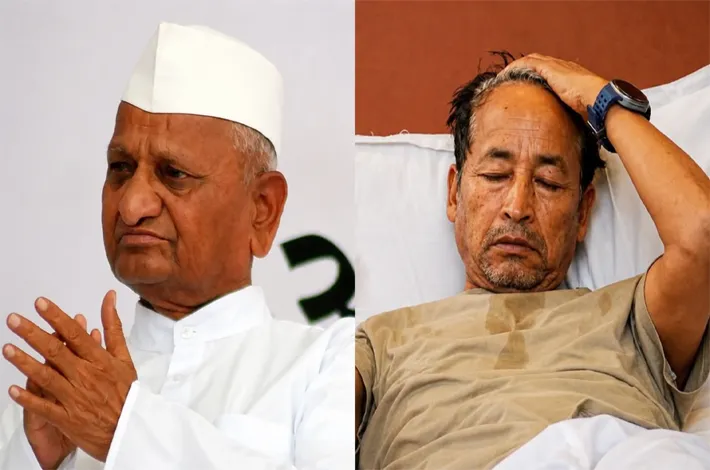
From Anna Hazare to Sonam Wangchuk
19-07-2026 12:00:00 AM
Et, tu Brutus!
■ If Sonam Wangchuk was taken away at 7 am, how did Dipke and others get his photos framed so quickly even before shops open?
■ Matlab did Dipke Saheb already know what would happen and these framed photos were prepared the previous day.
VJM Divakar
In April 2011, social activist Anna Hazare sat on a hunger strike at Delhi’s Jantar Mantar, igniting the India Against Corruption (IAC) movement. What began as a demand for a strong Jan Lokpal Bill against endemic graft snowballed into a nationwide phenomenon, drawing middle-class support, media frenzy, and eventually reshaping politics with the birth of the Aam Aadmi Party (AAP).
Fast-forward to June 2026: A satirical Instagram handle morphs into the Cockroach Janata Party (CJP), holding protests at the same venue. Led by founder Abhijeet Dipke and amplified by Ladakhi activist Sonam Wangchuk’s hunger strike, it demands the resignation of Union Education Minister Dharmendra Pradhan over exam paper leaks, irregularities in NEET, CUET, and other tests, and broader youth frustrations. Both movements share striking parallels in location, methods, symbolism, and trajectory, raising questions about whether genuine public anger is channelled through remarkably similar – some say too perfect – scripts.
Origins and Triggers
The IAC emerged amid UPA-era scams (2G, Commonwealth Games, coal) that eroded trust in institutions. Hazare, a Gandhian figure with a clean image, provided moral authority to a loose coalition including Arvind Kejriwal, Prashant Bhushan, and others under the IAC banner. Public fury over corruption, inflation, and governance failures found a focal point. CJP’s trigger was more contemporary and niche: exam leaks and systemic failures in education under the Modi government, compounded by high youth unemployment. The name derives from Chief Justice Surya Kant’s May 2026 courtroom remark likening certain unemployed, activist youth to “cockroaches.”
Abhijeet Dipke, with past AAP links and based in the US, capitalized on this with satire. An Instagram account exploded to over 20 million followers in days, outpacing major parties. What started as memes became offline action at Jantar Mantar on June 6, 2026, evolving into a sit-in. Both tapped deep discontent: IAC on broad corruption, CJP on aspirational failures affecting Gen Z – coaching industry exploitation, suicides, and broken promises of “Make in India” versus “Leak in India.”
Tactics and Symbolism: The Jantar Mantar Playbook
Jantar Mantar’s history as a protest hub made it the natural stage. Hazare’s fasting, tricolor-waving crowds, and non-violent civil disobedience evoked Gandhian ethos.
Media coverage was wall-to-wall; civil society, celebrities, and even some BJP elements lent support. CJP mirrors this: peaceful gatherings with books, flowers (symbolizing non-violence), tricolors, and cockroach masks. Protesters chant slogans, hold sit-ins, and emphasize discipline.
Sonam Wangchuk, known for climate and education work in Ladakh, began an indefinite hunger strike on June 28, 2026, joined by students. He visited Rajghat, paying homage to Gandhi – a direct nod to the 2011 playbook. Demands focus on accountability (Pradhan’s resignation) but broaden to governance issues.
Both leveraged media effectively. IAC dominated traditional TV; CJP dominates social media, with rapid virality despite reported blocks. Both faced (or were accused of) political undertones: IAC was criticized as being soft on or co-opted by opposition/Right-wing elements before Kejriwal’s AAP pivot; CJP draws Left-leaning support (AISA activists) while claiming youth neutrality, with Dipke’s AAP background noted.
Outcomes and Political Ripples
IAC forced Parliament to debate the Lokpal Bill, pressured the government into negotiations, and catalyzed AAP’s rise as an anti-establishment force. However, it fragmented: Hazare distanced himself from politics, while Kejriwal built electoral success.
Critics later argued it destabilized UPA without fully delivering systemic reform. CJP, still nascent (weeks old by mid-2026), has sustained protests, attracted cross-sections (students, parents, farmers), and kept education accountability in headlines. Wangchuk links it to Ladakh issues. Its impact remains unfolding: it pressures the government but risks dilution or co-option. Doctored images linking Hazare to CJP events highlight attempts to manufacture continuity.
In 2011, the movement aligned with anti-incumbency waves, aiding BJP’s 2014 rise indirectly. In 2026, CJP channels youth disillusionment amid economic pressures. Both expose real failures (corruption then, education/employment now) but follow predictable arcs: outrage, mobilization, fasting, negotiations, partial concessions or fatigue, and political realignment.
Critics allege orchestration by invisible hands – NGOs, opposition, foreign influences, or even ruling party strategists to manage dissent – though evidence remains circumstantial. Governments of the day often painted them as destabilizing. Yet, dismissing them as pure scripts overlooks agency. Public participation reflected authentic pain. IAC highlighted governance deficits; CJP spotlights a competitive exam system failing millions. Social media accelerated CJP in ways unavailable in 2011, democratizing (or fragmenting) protest.
Lessons and Broader Implications
These movements underscore Jantar Mantar’s role as India’s protest theater and the power of symbolic, non-violent resistance in a democracy. They also reveal vulnerabilities: youth bulge without jobs/quality education breeds volatility. Repeated exam scandals erode trust in institutions more than any “cockroach” label. Whether CJP evolves like IAC into a lasting force or fizzles depends on sustained momentum and government response.
Both prove that “people’s movements” thrive on timing, relatable symbols, and media – but risk being co-opted or fading once the spotlight dims. From Anna to Sonam, the script feels familiar because underlying issues – accountability, fairness, aspiration – persist across regimes. True change demands more than protests at the same historic site; it requires institutional fixes beyond the next hunger strike.
Raju Parulekar, Writer
"Delhi riots, Shaheen Bagh protests, lynching of Muslims in the country, farmer protests, Kashmir issue, demand for Hindurastan, RSS terrorism, CAA NRC, Muslim voting rights in SIR... @Wangchuk66 and his companions have supported the Modi government on all these issues. Most of the time, they haven't taken a stance in favor of humanity and rationality.
They've always sided with the government's Islamophobic stance. Besides, Dharmendra Pradhan can't do anything without Modi and Shah's permission. Pradhan's resignation won't change anything. That's why I believe whatever Wangchuk and Deepak are doing is to divert attention from other important issues. It shouldn't be considered a people's movement.”
Inspector Shivani Chaudhary on Abhijeet Dipke's hunger strike
"Sonam Wangchuk himself called us, as he needed medical attention. He woke up today and saw that neither Abhijeet nor Saurav was there. He had been noticing for the past few weeks that they were not at the protest until afternoon.
He found out that they were living in a 5 star apartment. He felt betrayed that he was starving here while they were enjoying in the name of the protest. We would never have taken him without his permission. Now workers are frustrated and overreacting because they feel that Sonam Wangchuk will reveal this thing and it would affect their image."