21 September, 2026 | 12:02 AM


Government turns to land sales for funds
18-05-2026 12:00:00 AM
metro india news I hyderabad
In the current economic situation, sustaining both development and welfare in Telangana has become a major challenge for the state government. The administration is exploring new avenues to mobilize financial resources in order to ensure smooth governance. The rising financial burden due to massive election promises, implementation of welfare schemes, and increasing expenditure has triggered intense discussions in political and economic circles about pressure on the state exchequer.
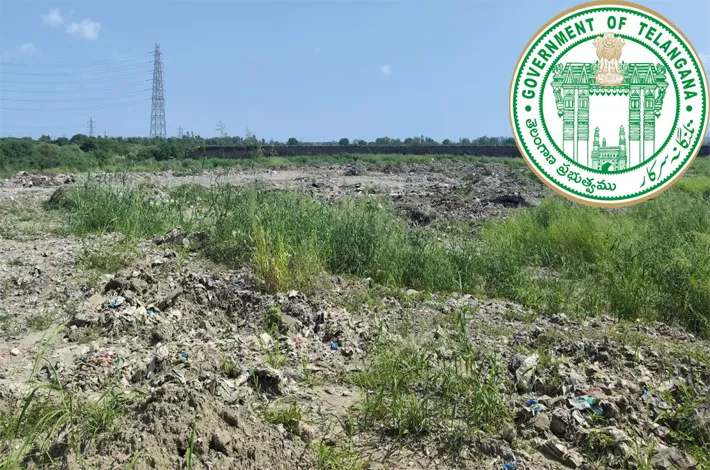
Amid this backdrop, the Telangana State Industrial Infrastructure Corporation (TGIIC) has once again prepared to auction government lands in Raidurg, one of Hyderabad’s most premium and high-value real estate zones. At the same time, questions are being raised over whether selling valuable public land is becoming a recurring method to meet financial needs.
The government is also reportedly borrowing funds with central approvals while simultaneously putting some of the most valuable state-owned lands up for sale to generate revenue. This dual strategy has now become a major point of debate. Critics are questioning whether it is justified to sell permanent public assets to meet temporary financial requirements.
Concerns are also being raised that auctions of land are being conducted primarily to fund welfare schemes such as Rythu Bharosa and other financial commitments. Opposition parties argue that this reflects the state’s weakening fiscal position and point out that land once preserved for future use is now being converted into a revenue source, indicating what they call a failure in financial management.
Land in Raidurg priced at Rs 139 crore per acre
TGIIC has decided to auction government land in Raidurg, which is considered one of the most expensive real estate corridors in Hyderabad. The area is located close to the IT hub of Hitech City, Gachibowli, the Outer Ring Road, and the international airport, making it highly attractive for investors.
Due to its strategic location, Raidurg has developed into a major hub for IT, life sciences, healthcare, commercial projects, hospitality, education, and retail sectors. This has resulted in strong demand from investors over the years, pushing land prices to record levels. In a previous auction conducted after the Congress government came to power, land in Raidurg Knowledge City had reportedly fetched a record price of Rs 177 crore per acre in October 2025, marking a new milestone in Telangana’s land auction history. Officials say land values in the area have increased by nearly 75 percent in just a few years.
Now, TGIIC has issued a fresh notification for the auction of around 11.38 acres of land. This includes 6.29 acres in Plot No. 1A and 1/F, along with 5.09 acres in Plot No. P4. The auction is scheduled to be held on the 26th of this month, with a minimum price fixed at around Rs 139 crore per acre.
However, the real discussion has shifted from pricing to intent. While the government maintains that these auctions are part of development and infrastructure planning, there is growing talk within administrative circles that the primary aim is to raise funds for welfare expenditure. It is also being reported that the third phase of Rythu Bharosa payments is facing financial delays. According to sources, only select farmers with one or two acres are receiving payments in phases, while many others are still awaiting funds.
Can selling land sustain forever?
As the state’s financial condition tightens, the government has issued strict instructions to control expenditure. Departments have been directed to cut unnecessary spending and maintain financial discipline. Despite these measures, a significant gap between income and expenditure continues to persist, pushing the government to explore alternative revenue streams.
A cabinet sub-committee has also reportedly suggested several options including sale of government lands, disposal of Rajiv Gruhakalpa flats, recovery of pending taxes, and implementation of one-time settlement schemes. These proposals are being viewed as part of a broader attempt to strengthen state finances.
Meanwhile, discussions are also underway regarding a possible increase in liquor prices, which has triggered public concern. Critics argue that the government is indirectly increasing the burden on citizens by raising revenue through alcohol prices, land sales, and higher registration values, instead of directly increasing taxes.
Opposition parties have strongly criticized these measures, alleging that the government is shifting financial pressure onto the public. They argue that the implementation of six guarantees announced during elections, along with other welfare schemes, has now become a financial burden for the administration.
Economic experts note that implementing such large-scale welfare commitments requires thousands of crores of rupees, but in the absence of stable revenue sources, the government is increasingly dependent on borrowing, land auctions, and price revisions.
The ongoing debate around Telangana’s land sales raises a critical question: how long can welfare be sustained by selling public assets? Once these lands are exhausted, what alternative resources will remain for the government? And will the sale of permanent assets for temporary financial relief become a burden for future generations?
These questions are now echoing strongly in political, administrative, and economic circles, making the Raidurg land auction not just a financial event, but a larger policy debate about the state’s fiscal future.