20 September, 2026 | 9:48 PM


Rajinikanth’s Graceful Nod to Vijay’s Triumph
18-05-2026 12:00:00 AM
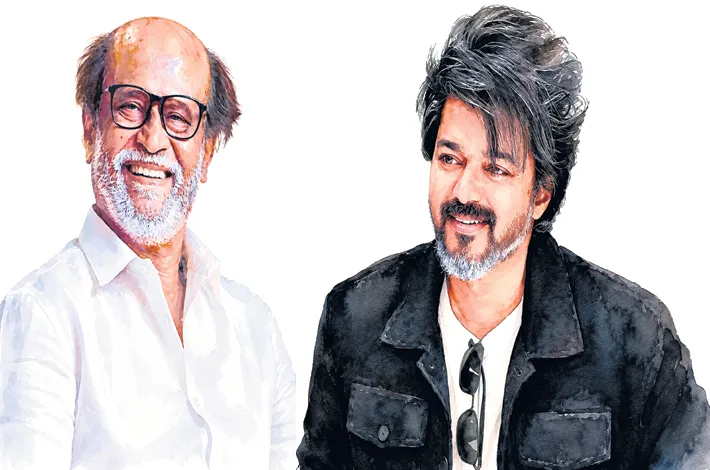
A Rare Spotlight on Sportsmanship in Politics
metro india news I hyderabad
In the high-stakes arena of country’s politics, where victories are often met with defiance, denial, or deflection, superstar Rajinikanth’s response to actor-turned-politician Joseph Vijay’s stunning ascent as Tamil Nadu Chief Minister stands out for its simplicity and positivity. Following TVK’s historic debut win in the Tamil Nadu Assembly elections—securing 108 seats and forming a government with allies—Rajinikanth promptly congratulated Vijay and his party on social media. “My congratulations to Thiru Vijay, President of the victorious Tamilaga Vettri Kazhagam, and to the members of his party, on their resounding victory,” he posted. When later asked about Vijay’s oath-taking, the veteran actor offered a warm smile and folded hands without further comment.
This restrained still affirmative gesture from a cultural icon who has long loomed large in Tamil Nadu’s public imagination highlights a refreshing maturity. It contrasts sharply with the more combative or qualified responses typical among active politicians facing defeat. In a landscape often defined by acrimony, Rajinikanth’s approach—celebrating the democratic verdict without ego or agenda—offers a model worth examining against broader national patterns.
Rajinikanth, who has flirted with politics himself but largely stayed above the fray, responded as a senior statesman of Tamil cinema. His congratulations carried no undertones of rivalry despite past comparisons between the two stars. The airport smile-and-wave moment further underscored poise: acknowledgment without elaboration.
Contrasting Reactions from Political Leaders
Outgoing CM and DMK leader M.K. Stalin offered formal congratulations but laced them with advice and pushback. He acknowledged Vijay’s early announcements while defending his government’s financial record and cautioning against claims of an empty treasury. “Don’t start saying straight away that the government has no money. It’s all there,” Stalin stated, blending courtesy with a political jab. He later met Vijay cordially but framed the interaction with reminders of experience.
AIADMK under Edappadi K. Palaniswami (EPS) faced internal fractures. While some factions extended support to TVK for the floor test, the leadership response involved criticism and crisis management rather than unqualified welcome. Rebels backed Vijay, but the party grappled with poor performance and calls for EPS to step down, reflecting bitterness over the loss more than gracious acceptance.
Nationally, Indian politicians’ reactions to opponents’ victories reveal a spectrum. Gracious exceptions exist: Prime Minister Narendra Modi and others have extended congratulations across aisles in various state or general election contexts, and cross-party well-wishes occur (e.g., after Delhi or other state wins).
However, patterns often lean toward questioning mandates, citing “anti-incumbency” or external factors, legal challenges, or immediate counter-narratives rather than pure acceptance. In 2024 Lok Sabha outcomes, opposition leaders celebrated gains as moral victories against the ruling dispensation, while the BJP framed results defensively at times. Denialism, “stolen election” claims (though rarer in India), or focus on rigging allegations surface more frequently than in mature democracies.
Rajinikanth’s detachment—as a non-active politician and elder—allows purer positivity. Active leaders, tied to party fortunes and voter bases, find it harder to separate personal ego or organizational survival from public verdicts. Stalin’s response, while not outright hostile, exemplifies the qualified congratulations common in competitive federal politics: acknowledge the win, then pivot to legacy defense or governance lectures.
Why This Matters: Sportsmanship and Democratic Health
Rajinikanth’s reaction gains significance against India’s polarized discourse. Celebrities entering politics (Vijay, Kamal Haasan, or past figures like MGRand NTR) often polarize, but cross-endorsements from icons can normalize transitions. His measured positivity contrasts with instances where defeated leaders refuse to concede gracefully or incite protests. It echoes rarer moments of bipartisanship, such as opposition leaders congratulating winners in intra-party or smaller contests.
In Tamil Nadu’s cinema-saturated politics, this carries cultural weight. Rajinikanth, often called Thalaivar, signaling acceptance helps legitimize Vijay’s mandate among fans and moderates. It models for younger leaders that democracy thrives on accepting people’s will, not perpetual contestation.
Critics might note Rajinikanth’s silence at the airport as evasion rather than depth, and his DMK visit post-results drew some speculation. Yet the initial public congratulations remain unambiguously positive. Compared to national trends—where winners trumpet triumphs and losers dissect “myths” or institutional biases—his approach feels elevated.
Broader Implications for Indian Politics
This episode underscores a persistent challenge: fostering a culture of graceful defeat. While countr’s democracy is vibrant and resilient, with peaceful power transfers, the rhetoric often undermines trust. Leaders could draw from Rajinikanth’s example—congratulate unequivocally, then compete on policy. Vijay himself has projected humility in post-win gestures, visiting opponents and emphasizing people’s victory.
As Tamil Nadu embarks on this new era under a fresh face, Rajinikanth’s warm acknowledgment reminds us that politics need not erase respect. In a country of 1.4 billion, where every election rewrites narratives, such gestures bridge divides and reinforce the idea that opponents today may be partners tomorrow—or at least fellow democrats. True leadership lies not just in winning, but in knowing how to lose (or watch others win) with dignity. Rajinikanth, the eternal superstar, delivered a quiet masterclass.