11 October, 2026 | 6:20 PM


Junior colleges cry foul
05-12-2025 12:00:00 AM
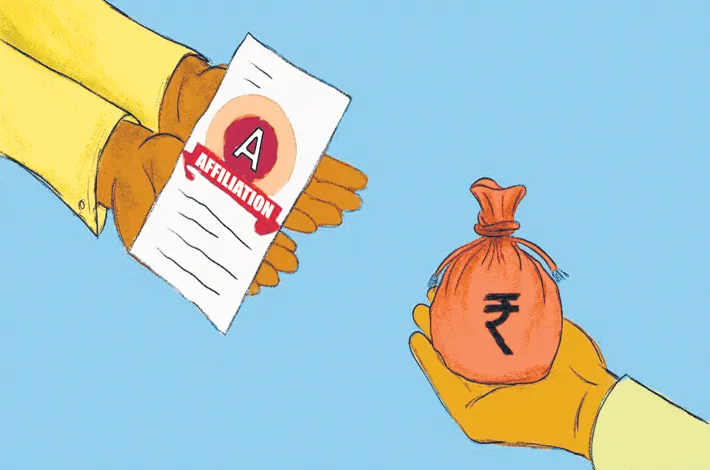
Affiliation turns a cash racket
Extortion behind permission?
- Building registration or lease deeds
- Approved building plans
- Fire safety NOC
- Mixed-occupancy certificates
- Corpus fund details
- Structural soundness reports
- Sanitary certificates
- Teaching staff documents
- Playground documents
Private junior colleges across Telangana allege that affiliation, shifting permissions and recognition processes have turned into a cash-rich racket inside the Intermediate Board. Managements claim officials insist on strict adherence to rules at first, but the same rules are ignored once money is paid. Several officials are reportedly collecting amounts running into lakhs from colleges seeking approvals. Permissions, they say, have become a tool for extortion, while arbitrary fines and penalties have pushed many institutions to the brink.
Every academic year, District Intermediate Education Officers (DIEOs), who supervise all junior colleges for inspections and permissions, allegedly begin exerting pressure. Their authority over approvals has given them enormous leverage, leading managements to describe the system as one of “systematic exploitation.”
For affiliation, colleges must submit a long list of documents: building registration or lease deeds, approved building plans, fire safety NOCs, mixed-occupancy certificates, structural stability reports, sanitary certificates, corpus-fund details, teaching staff records and playground documents. Colleges allege that these very requirements are being used to demand money at multiple stages—from inspection to approval.
Fire NOCs, mixed-occupancy certificates and sanitary clearances are the most critical. This year, 1,460 private colleges sought affiliation, and 1,368 were approved by October, while several dozen applications remain pending. About 200 private colleges operate in mixed-occupancy buildings, 90 percent of them in Hyderabad, Medchal and Rangareddy districts. Buildings under 15 metres require fire equipment; those above 15 metres need a Fire Department NOC. Many colleges do not have this NOC, leading to rejections and stalled files in both the Board office and the Secretariat. Managements allege officials are demanding lakhs to clear these files.
Frequent disputes with building owners are forcing colleges to vacate premises, triggering the need for shifting approvals. Colleges say this is the biggest nightmare, with officials allegedly refusing permissions unless lakhs are paid. Even when colleges offer smaller sums, some DIEOs allegedly bargain for more, leaving managements helpless.
Another major burden is penalties. Small and mid-sized colleges claim they are being crushed by fines imposed for delays often caused by other departments. Even when colleges apply on time for sanitation or fire NOCs, the certificates may arrive late, leading to missed deadlines for affiliation renewal, shifting approval or exam-fee submissions. Colleges allege that officials then impose arbitrary fines: affiliation delays cost around Rs 1 lakh; unauthorized shifting attracts penalties starting from Rs 5 lakh. Despite paying official fines, unofficial payments are still allegedly demanded.
Shifting permissions alone reportedly attract demands of Rs 1–1.5 lakh, while NOCs cost even more. At the Secretariat level, the sums sought for affiliation or clearance are allegedly higher. Meanwhile, missed exam-fee deadlines force colleges to pay late fees for students—Rs 500 per student. A college with 500 students ends up paying Rs 2.5 lakh.
Managements say growing penalties, unofficial payments and stagnant approvals are pushing institutions into financial collapse. They allege files move only when bribes are paid and penalties are imposed without logic. Many now seek urgent government intervention to end what they describe as relentless extortion masked as regulation.