19 October, 2026 | 9:15 AM


Redev projects in Mumbai need to tick several boxes
01-07-2026 12:00:00 AM
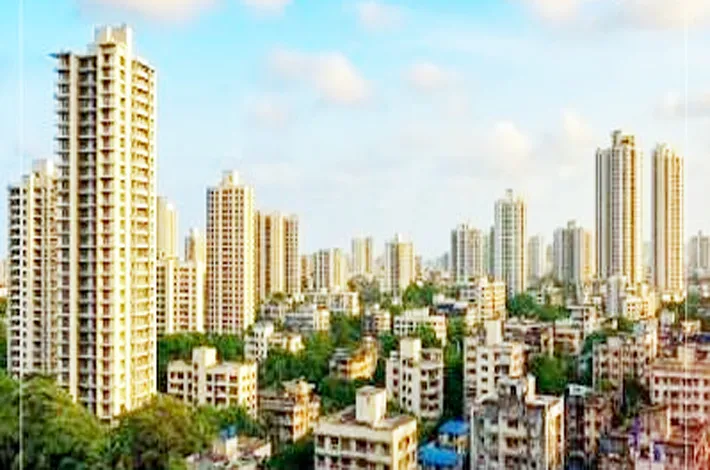
Redevelopment sounds like a capital idea which surely has benefits, but to ensure there is order in such projects, all issues need to be ticked
Redevelopment of residential buildings has caught on recently in Mumbai. Several projects have been taken up where either individual societies or the local authorities have been going in for such redevelopment ostensibly to improve urban living. But there are some issues which, ideally, should be addressed and taken care of to ensure that this process is orderly and not haphazard, which is a risk associated with such schemes.
First, it is necessary for one to get a feel about what redevelopment is all about. Normally, there is a rule that once a building is over 30 years old, such redevelopment can be undertaken. If not, a structural audit is required periodically to certify that the structure is sturdy and safe. Even if it is less than 30 years, redevelopment can be considered if specific conditions are met on structural issues.
Typically, the owners represented by the society will call for bids after a majority approve the concept. Various developers put in bids which cover issues like how much extra area will be given, the amenities to be provided, the time to be taken for completion, the monetary compensation to be provided for the interim period, and any lump-sum amount to be given to the owners, among others. The best bid, theoretically, is accepted, and the project commences. Often, a bank guarantee is insisted upon to ensure that the owners get paid what they are promised during the period.
When the project is undertaken by the government authority, which could be the owner of the land, then the project is often extended to a cluster concept where several buildings in the area are all part of the deal. Hence, instead of individual buildings, the authority can do it for, say, 30 buildings along with the roads and open spaces, as technically the land is leased to the owners. This can create a new township. Say, a cluster of 30 buildings with seven stories and 28 flats each can get converted to 30-storied buildings with 180 or more flats each, depending on the FSI that is permitted.
This is considered to be a win-win situation, as the local authority can monetise the asset, which is land, and take a lease rent again; owners get bigger dwellings with modern amenities; and the developer sells the balance of the flats at market rates and reaps high profits.
Are there any misgivings here? From the point of view of owners there are several concerns. The first is the issue of what the right additional area that should be given is. There are no standards and, invariably, there is a lot of bargaining. Second, in the new structure, not all can get the same floor or view, as the developer would like to keep the best-located units for commercial sale. Third, an itchy question is, what if the builder runs into problems and becomes bankrupt and cannot complete the project? Or if there is a time overrun due to litigation? Fourth, if there is a time overrun and the monthly rent to be paid by the builder stops due to financial constraints, where does one go?
Fifth, what if the amount to be paid as rent by the builder suddenly stops and invoking the guarantee takes time as the issue goes to court? Sixth, while a rent is promised to be paid for the period of construction, how does one find alternative accommodation? Finding it in the same area will not be possible, as rents tend to rise once such information spreads. There is, hence, the inconvenience of relocation.
Last, when the new structure comes up, owners rarely consider the higher payments that have to be incurred, as the monthly maintenance costs as well as municipal taxes go up considerably. Individuals paying, say, Rs 2,000 a month as taxes and maintenance will suddenly realise they have to pay Rs 15-20,000 for staying in a skyrise building.
These are issues that have no guaranteed answers, and one often hears of stalled projects and owners running to courts and not getting solutions. In fact, often projects run into legal issues along the way which cause time delays. At times, as has been announced in Mumbai recently, there could be new rules which can come in the way, like the supply of water for construction projects due to a late monsoon. These factors cannot be accounted for.
From the point of view of the city or town, there is a broader issue. Having 10 or 20 times the number of existing residents strains the infrastructure. Water supply is the main challenge, as the municipal authority will have to ensure multiple times the normal supply. The same holds for power supply. There will be reworking of all these lines, including gas, drainage, waste collection, and so on. This cost is often not considered.
Ideally, all these factors have to be considered before giving approval because the lure of higher benefits for the three stakeholders tends to make them overlook these issues.
Further, as these are new projects, there must be insistence on two major infrastructure projects in a city like Mumbai. First, the developer must create a water harvesting system for the project, with the municipal corporation also specifying the proportion of overall supply that has to be provided by this facility.
This should also be associated with a water treatment plant so that the new society becomes self-sufficient to an extent. Second, insistence on harnessing and using solar power, where the panels are installed on all buildings so that the pressure on the power supply from the local distribution company comes down.
Redevelopment sounds like a capital idea which surely has benefits, but to ensure there is order in such projects, all these issues need to be ticked so that there is transparency and less scope for failure.