23 September, 2026 | 10:48 PM


AR Rahman stirs up a hornet’s nest on Bollywood becoming divisive
19-01-2026 12:00:00 AM
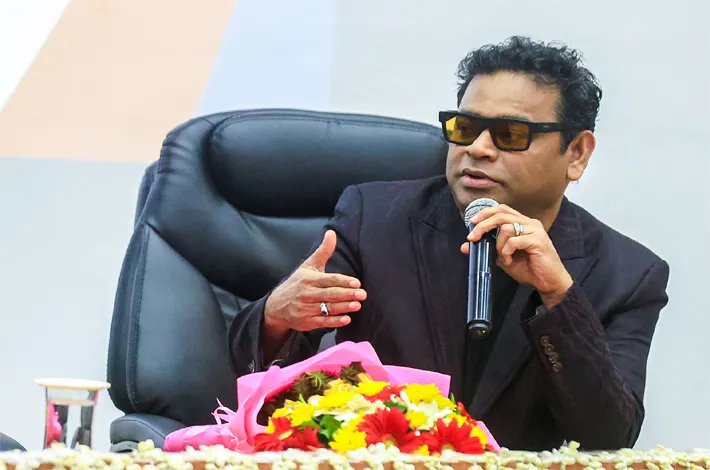
In a recent outburst that has ignited widespread discussion, India's beloved music maestro AR Rahman has voiced concerns about uncreative and divisive elements within Bollywood. Speaking out after years of perceived sidelining, Rahman highlighted a noticeable dip in his projects over the past eight years. He specifically referenced his work on films like Chhava and the upcoming Ramayan, even labelling one of his own compositions as divisive. This has prompted questions about whether cabalism—cliquish or biased practices—exists in the industry, a debate unlikely to fade soon.
The controversy erupted when Rahman suggested that communal biases might be at play, affecting opportunities for artists like him, a Muslim composer renowned for blending diverse cultural influences. His comments come amid broader conversations about Bollywood's power dynamics, where superstars like Shah Rukh Khan, Salman Khan, and Aamir Khan have long dominated. Critics argue that claims of discrimination based on religion seem flimsy given the Khans' success, yet Rahman's stature as an Oscar-winning legend lends weight to his words.
A Hindu activist while affirming his admiration for Rahman—recalling how the composer revived the spirit of Vande Mataram—expressed skepticism. As a self-described Hindu right-wing activist, he noted Rahman's involvement in Chhava, a film with emotional historical elements, and praised his willingness to engage across divides, much like Aamir Khan. However, he cautioned that Rahman's statements could fuel international media narratives demeaning India, urging more sensitivity. He emphasized that societal hatred exists but remains fringe, not mainstream, and called Rahman's labeling of Chhava as divisive unfortunate, given its depiction of historical conflicts.
Actor Nasir Abdullah admitted he hadn't felt it directly, having started his career in 1987 and thriving in Bombay (now Mumbai), but acknowledged hearing of others facing degradation. He pointed to highs and lows in careers, citing Amitabh Bachchan's decade-long dry spell, and criticized over-the-top propaganda films like The Kashmir Files and The Kerala Story for exaggerating events and stoking anti-Muslim negativity.
Abdullah elaborated on The Kashmir Files, noting its rejection at the Goa Film Festival by an Israeli director who called it "obscene propaganda," and questioned The Kerala Story's inflated claims of 30,000 women joining ISIS when records showed only three. He argued such films generate unnecessary suspicion toward Muslims, though he clarified he hadn't faced bias in auditions, attributing failures to his own performance. On propaganda, he advised subtlety and avoidance of prestigious festivals or Oscar submissions, where entries don't guarantee recognition.
A senior journalist and political analyst defended Rahman's patriotism and credentials, invoking his full name "Allah Rakha Rahman" and recalling a concert where Rahman declared himself a Hindustani uniting Hindus and Muslims. Describing Rahman as an enigma and national pride, the analyst listed Rahman’s masterpieces infused with patriotism, from Vande Mataram to songs under various prime ministers. He argued that Rahman's decades of contributions render demands for proof of bias unnecessary. He also shamed attempts to question Rahman's loyalty, insisting his statements signal a genuine cause for concern that demands attention.
An author countered Rahman’s remarks by pointing to Rahman's role in Ramayan—arguably the most Hindu-centric story—without public objection, underscoring societal tolerance. She suggested interpersonal issues might explain his experiences but criticized generic statements for casting undue shadows on the industry's acceptance. Urging Rahman to name and shame perpetrators, she shared her own losses of work due to ideological biases, affirming such discrimination exists but emphasizing the need for specifics to combat it.
It was also agreed that uncreative corporate suits now dictate Bollywood's creative decisions, frustrating artists, but felt Rahman's ideological framing missed an opportunity to advocate for sidelined creatives. As the discussion wrapped, it was clear this controversy reflects deeper tensions in Indian cinema, blending admiration for its icons with calls for accountability.