29 September, 2026 | 12:49 PM


Bonded labour survivor leads historic flag hoisting
27-01-2026 12:00:00 AM
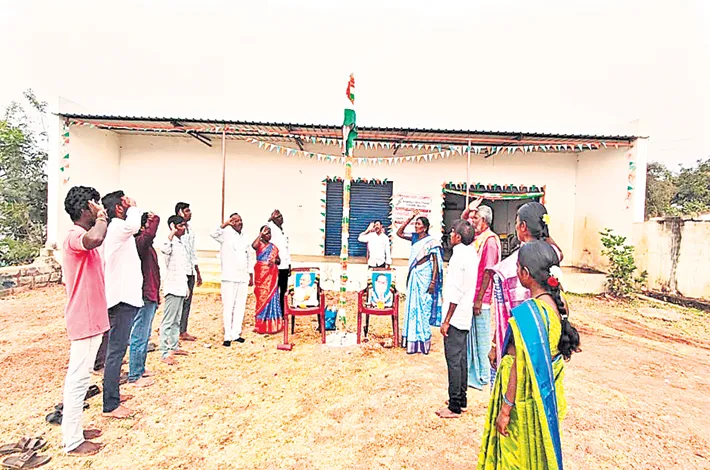
In a historic first for the Chenchu community of Amaragiri, the Indian national flag was hoisted in the village on Monday, symbolising dignity, freedom, and belonging for a community long pushed to the margins. The ceremony was led by Pedda Lingamma, a former bonded labourer and the newly elected sarpanch, marking a milestone in the journey from oppression to self-determination.
For decades, the Chenchus of Amaragiri lived under the harsh realities of bonded labour. Deprived of fair wages, freedom of employment, and access to basic rights, their lives were constrained by systemic exploitation. Although the Bonded Labour System (Abolition) Act came into force in 1976, its protections reached this remote forest-edge village only decades later.
Pedda Lingamma’s own story reflects the community’s struggle and resilience. In January 2016, she was among 106 bonded labourers rescued following a government inquiry initiated by civil society advocacy. Survivors were issued Release Certificates, officially freeing them from the debts and exploitative arrangements tied to fishing along the Krishna River. “Watching national celebrations from afar was our reality for years. Hoisting the flag ourselves today makes us feel that we finally belong to this country,” Lingamma said after raising the tricolour, her words capturing the long-awaited assertion of identity and citizenship.
The journey from rescue to recognition was not without challenges. Survivors faced intimidation and resistance when seeking access to markets, schools, and public services. Gradually, progress came through collective organisation, advocacy, and sustained government support. Various departments extended assistance to ensure the community’s integration. The fisheries department provided boats and nets, while the Integrated Tribal Development Agency helped with market access through two-wheelers equipped with ice boxes. Families also received ration cards, MGNREGA job cards, cooking gas connections, housing aid, and school admissions for children.
Pedda Lingamma’s election as sarpanch in December last year reflects a deeper transformation. From surviving exploitation to participating in governance, her leadership signifies the Chenchu community’s shift from marginalisation to empowerment. Her focus, she said, will be on ensuring basic facilities, including roads, drinking water, education, and healthcare for her people.
The change extends beyond the sarpanch’s post. Eight other Chenchu community members from Amaragiri and neighbouring villages, many former bonded labourers, were elected as ward members in recent local elections, highlighting a growing trend of political participation and representation.
The flag hoisting ceremony was attended by Deputy Sarpanch Medde Raghavendra, Secretary Nagaraju, and ward members Supperi Rameshwaramma, Udumula Veeramma, Ilini Unkalamma, and Katraju Lingamma. For the community, the event was more than a ceremonial act; it was a declaration of belonging, resilience, and hope for a future free from exploitation.
While Amaragiri’s story represents remarkable progress, bonded labour continues to surface in other parts of the state, reminding authorities and society that vigilance, enforcement, and survivor-focused rehabilitation remain critical. For the Chenchus of Amaragiri, today’s tricolour hoisting is a long-delayed but powerful affirmation: freedom has finally come home.