28 September, 2026 | 7:27 AM


Once Burnt, Still Trusting?
27-01-2026 12:00:00 AM
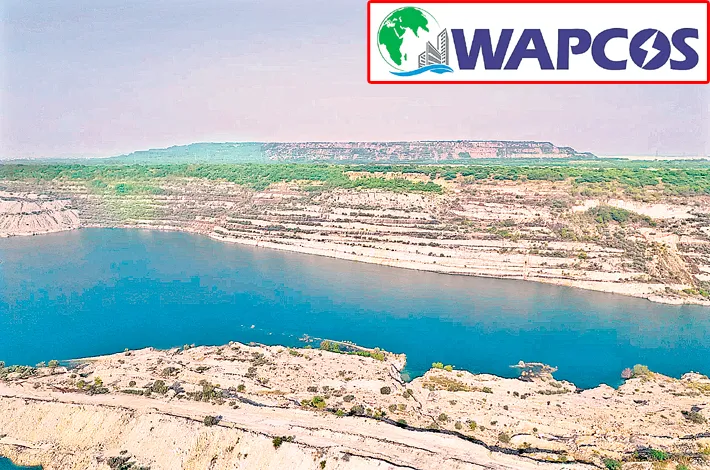
Singareni decision to award the DPR preparation for its first-ever pumped storage hydel power project to Water and Power Consultancy Services, the same central public sector consultancy that prepared the Detailed Project Report (DPR) for Kaleshwaram is questionable
Once bitten, twice shy. Not in this case. The controversy surrounding the Kaleshwaram Lift Irrigation Project refuses to fade and is now casting a long shadow over Singareni Collieries Company Limited’s ambitious foray into pumped storage hydel power generation. At the heart of the emerging storm is Water and Power Consultancy Services (WAPCOS), the same central public sector consultancy that prepared the Detailed Project Report (DPR) for Kaleshwaram, a project that later witnessed the collapse of the Medigadda barrage and serious structural deficiencies in other barrages.
Kaleshwaram has become one of the most debated irrigation projects in Telangana and across the country. Constructed at breakneck speed during the previous BRS government’s tenure and showcased as a landmark achievement, the project began to unravel within just three years of commissioning. Days before the 2023 Assembly elections, the Medigadda barrage subsided, triggering political and administrative turmoil. Investigations conducted later by the Vigilance and Enforcement wing fixed responsibility on more than 40 engineers and officials. The one-man commission headed by Justice P.C. Ghose went a step further by summoning former Chief Minister K. Chandrashekar Rao and recommending action against engineers, officials, political leaders, public representatives and contracting agencies involved in the project.
Water and Power Consultancy Services played a pivotal role in Kaleshwaram by preparing the DPR that served as the project’s technical foundation. The consultancy identified locations for the Medigadda, Annaram and Sundilla barrages, designed their structures, and detailed pump houses, canals, tunnels, surveys and preliminary engineering layouts. Experts argue that a project built strictly according to this DPR collapsing so soon inevitably raises serious questions about WAPCOS’s technical competence and accountability.
Against this backdrop, Singareni’s decision to award the DPR preparation for its first-ever pumped storage hydel power project to Water and Power Consultancy Services has triggered widespread criticism. Singareni, one of Telangana’s most profitable public sector undertakings, employs around 42,000 workers and plays a critical role in supplying coal to southern India. As part of its diversification strategy, the company has proposed a 500 MW pumped storage power plant at the Medipalli Open Cast mine in the Ramagundam-I area.
Following complete coal extraction, the Medipalli open cast pit has transformed into a vast reservoir about 157 metres deep, filled entirely with rainwater that remains available year-round. Singareni’s plan involves creating an upper reservoir by excavating a new pond measuring around 2,350 metres in length and 23 metres in depth. Water released from this upper reservoir into the lower Medipalli pit would generate electricity through a pumped storage mechanism.
While the concept itself is considered innovative, controversy erupted over how the DPR contract was awarded. Singareni handed over the DPR preparation, costing approximately Rs 7 crore, directly to Water and Power Consultancy Services without inviting tenders. Experts point out that DPR preparation, particularly for a technically complex project of this scale, normally requires an open and competitive bidding process involving agencies with proven experience in pumped storage technology.
The absence of tenders has raised serious doubts about transparency and intent. Critics fear that the pumped storage project could follow the Kaleshwaram trajectory if the DPR is flawed, especially since the same consultancy is already under scrutiny for its role in the irrigation project failure. The fact that the DPR will form the backbone of a Rs 3,000 crore project expected to operate for 40 years has further intensified concerns.
Pumped storage power plants are highly specialised and relatively new in India, with only a limited number of agencies having hands-on experience in this domain. Experts argue that Singareni should have entrusted the DPR to organisations with demonstrated expertise in pumped storage systems. However, Water and Power Consultancy Services is alleged to lack substantial experience in this specific field, raising questions about why it was chosen over more qualified agencies.
The controversy deepens because WAPCOS is already accused of preparing a defective DPR for Kaleshwaram, which experts believe contributed directly to the Medigadda barrage collapse and structural defects in the Annaram and Sundilla barrages. In this context, assigning WAPCOS responsibility for another technically sensitive DPR has led to fears that similar design errors, cost miscalculations and engineering lapses could recur.
Several experts have gone further, arguing that Water and Power Consultancy Services should have been blacklisted for its role in the Kaleshwaram debacle. They allege that the consultancy conducted superficial surveys, failed to adequately assess geological and geotechnical conditions, and submitted a DPR riddled with technical flaws, inflated cost estimates and structural vulnerabilities. According to them, the scale of failure warrants penalties, nationwide blacklisting and even criminal action against those responsible.
Despite these serious allegations, Singareni has awarded the DPR contract to WAPCOS on a nomination basis, citing its status as a central public sector undertaking. Critics argue that this preferential treatment strengthens suspicions of internal understandings and vested interests. They warn that repeating the Kaleshwaram model could expose Singareni to financial losses running into thousands of crores.
As per the agreement, Water and Power Consultancy Services is expected to conduct comprehensive geological, geotechnical and hydrological studies, prepare civil, mechanical and electrical designs, assess environmental and safety aspects, and provide cost estimates and timelines. The DPR must also include power tariff projections and ensure long-term economic viability, enabling affordable electricity generation over a projected 40-year operational life.
However, given WAPCOS’s track record, experts question whether such an extensive and technically demanding DPR will be prepared with the required depth and rigour. They recall how the Kaleshwaram DPR allegedly inflated estimates by 20 to 30 percent, tailored specifications to suit select contractors and ignored critical risk factors.
Concerns are now being raised that similar practices could be repeated in the pumped storage project, including cost escalation, contractor-friendly specifications and compromised transparency. If this scenario unfolds, critics warn, Singareni could suffer massive financial damage and the project’s long-term sustainability would be seriously jeopardised.
Many experts insist that the only way to safeguard the project is to cancel the nomination-based DPR contract, invite open tenders and award the work to an experienced agency through a transparent process. They urge government officials and public representatives to intervene without delay, warning that if lessons from Kaleshwaram are ignored, the pumped storage project may struggle to survive even four years, let alone the promised four decades.