12 October, 2026 | 1:30 PM


Plan to inflame North-East busted? Who sent guns for hire?
23-03-2026 12:00:00 AM
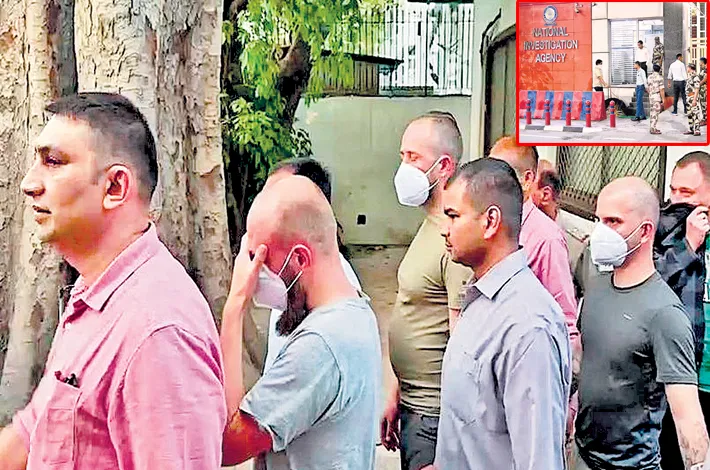
Seven foreign nationals—six Ukrainians and one American mercenary named Matthew Van Dyke—are currently in the custody of India's National Investigation Agency (NIA). The arrests occurred on March 13, 2026, in a coordinated operation at three major airports: Delhi, Lucknow, and Kolkata. According to the NIA's submissions to a Delhi court, the group entered India on valid tourist visas but proceeded to Guwahati, then travelled to restricted and protected areas in Mizoram without the required permits. From there, they allegedly crossed illegally into Myanmar before returning to India, where they were apprehended.
The allegations against them are grave and point to a potential threat to India's national security. Investigators claim the individuals were involved in training Myanmar-based ethnic armed groups (EAGs), some of which have established links to banned insurgent organizations operating within India. The training reportedly focused on advanced drone warfare techniques, including drone assembly, operations, electronic jamming technology, and other modern asymmetric warfare methods.
The NIA has also accused the group of illegally importing and supplying drones from Europe, routing them through Mizoram to support these armed entities. Authorities describe this as part of a broader conspiracy that could destabilize India's northeastern region by fuelling insurgency, supplying weapons, and enhancing the capabilities of groups hostile to Indian interests. Matthew Van Dyke, the American in the group, stands out as a central figure.
He is the founder of Sons of Liberty International (SOLI), an organization that has provided military training and advisory services in various global conflict zones. Van Dyke has a documented history as a foreign fighter, having participated in Libya's civil war (where he was captured and later escaped), trained Ukrainian forces amid the ongoing conflict there, and been involved in other high-risk areas. He has been labelled a terrorist by the Assad regime in Syria. The NIA notes that while 13 or more Ukrainians may have been involved initially, only six were detained alongside Van Dyke, with efforts ongoing to locate the others.
A retired Lieutenant General, former Chairman of the Ceasefire Monitoring Group and ex-Director general of the Assam Rifles, emphasized his deep familiarity with the region's geography and history. He described Van Dyke as a confirmed mercenary leading the Ukrainian team, highlighting their expertise in technologically advanced warfare, particularly drones. The Lt. General raised critical questions: Were these individuals training Myanmar-based insurgents fighting the Tatmadaw (Myanmar's military), or were they equipping groups targeting Indian forces, such as the Assam Rifles? He pointed to a recent drone attack on Assam Rifles personnel—where jamming failed and injuries occurred—as potentially linked to such upgraded capabilities.
The Lt. General tressed the seriousness of the situation, noting the porous 1,643-kilometer India-Myanmar border, the lack of fencing in many areas, the free movement regime allowing cross-border travel within 10 km, and the absence of effective Myanmar army presence on the opposite side. He warned that such training could neutralize Indian drone surveillance, disrupt logistics in Manipur and Mizoram, and even aim to reignite violence in Manipur, where peace efforts have recently shown progress. He referenced past concerns, including Mizoram's chief minister expressing unease about foreigners entering under various pretexts, and reiterated that the Assam Rifles remains India's premier paramilitary force guarding this frontier.
A retired professor and specialist in global security threats, offered additional context on funding and motivations. He suggested that Myanmar's insurgent groups—numbering around 170 and increasingly organized into clusters—are likely paying Van Dyke and his team, given their access to cheap, battle-tested drones from Ukraine and extensive experience in drone warfare. He highlighted spillover risks from Myanmar's internal conflict into India, where these groups have grown more capable over recent years and employ both conventional and drone-based tactics against the Myanmar government.
The discussion also touched on speculation about Van Dyke's possible ties to intelligence agencies like the CIA, though General Johan cautioned that it was premature to draw such conclusions, preferring to focus on the evidence of mercenary activity. Both experts agreed that the case remains under investigation, with key uncertainties persisting—such as the precise recipients of the training and the full extent of any intent to target India directly. The NIA has explicitly stated links to Indian proscribed groups, underscoring concerns over efforts to "up the ante" and undermine regional stability.
This incident has sparked widespread alarm over vulnerabilities along India's northeastern borders and the potential for foreign mercenaries to exploit ethnic and insurgent networks in neighbouring Myanmar. As interrogations continue and more details emerge, the episode underscores the complex interplay of global conflict expertise, porous frontiers, and emerging technologies like drones in shaping security challenges in the region. Authorities have vowed to pursue the investigation thoroughly to uncover any broader networks or enablers involved.