12 October, 2026 | 2:31 PM


Supreme Court’s verdict on maternal leave- New questions aries
23-03-2026 12:00:00 AM
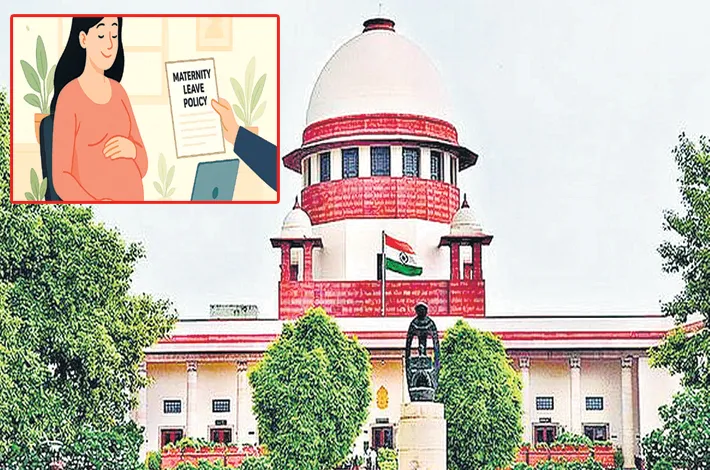
In a landmark ruling on March 17, 2026, the Supreme Court of India struck down a restrictive provision in the Code on Social Security, 2020, that limited maternity benefits for adoptive mothers to cases where the adopted child was below three months of age. The court declared Section 60(4) of the Code unconstitutional, holding that it violated Articles 14 (equality before the law) and 21 (right to life and personal liberty) of the Constitution. This decision ensures that all adoptive mothers are entitled to 12 weeks of maternity leave, irrespective of the child's age at the time of adoption.
The case originated from a public interest litigation filed by advocate Hamsaanandini Nanduri, an adoptive mother of two children. She challenged the provision—previously part of the Maternity Benefit Act, 1961, and later incorporated into the 2020 Code—as arbitrary, discriminatory, and unreasonable. Nanduri argued that the three-month age cutoff created an unfair classification among adoptive mothers.
It overlooked the physical, emotional, and nurturing needs of both the adoptive child (especially those older than three months) and the mother. She further contended that the restriction infringed on a woman's right to pursue her occupation or business under Article 19(1)(g), potentially discouraging working professionals from adopting.
A bench comprising Justices J.B. Pardiwala and R. Mahadevan delivered the judgment, emphasizing that there is no meaningful difference between a biological child and an adopted one in terms of family bonds and caregiving responsibilities. The court observed that while biology has historically defined kinship, adoption represents an equally valid pathway to parenthood. The legislative approach, by imposing an age limit, failed to account for real-world needs of care and integration, which do not abruptly end at a specific age but evolve gradually as the child adjusts to the new family environment.
The bench criticized the provision for operating unequally among similarly situated adoptive mothers, resulting in discrimination without reasonable justification. It failed the test of reasonable classification under Article 14, as there was no rational distinction between adopting a child under three months and one older, nor did the differentiation serve the law's objective of supporting maternal and child welfare. The court described the restriction as "palpably unreasonable and arbitrary," noting its under-inclusiveness and how it rendered the benefit largely illusory in practice, since many children—especially those with disabilities or in complex adoption processes—are adopted well after three months.
The ruling highlighted particular vulnerabilities, such as for children with disabilities who often wait longer for adoption, requiring extended time for nurturing, rehabilitation, and bonding. It also addressed the challenges faced by single adoptive mothers, who shoulder full caregiving responsibilities alongside professional duties. Without adequate leave, such mothers might face an untenable choice between employment and the child's immediate needs, undermining the purpose of social welfare legislation.
The Supreme Court distinguished maternity benefits in adoption from biological birth. While physical recovery after childbirth is unique to biological mothers, the critical elements of emotional bonding and facilitating the child's integration into the family apply equally to adoptive situations. Parenthood, the bench affirmed, extends beyond biology to encompass diverse family structures, including adoption and surrogacy. Denying benefits based on age would undermine constitutional rights in non-traditional setups.
Drawing on the principle that the child's best interests must remain paramount, the court stressed that welfare continues beyond adoption formalities. It enables meaningful adjustment, bonding, and flourishing in the new family. The judgment also urged the Union government to introduce paternity leave as a recognized social security benefit, noting that existing limited provisions (such as 15 days for male government servants) reinforce outdated gender roles in parenting. True shared responsibility, the court said, supports holistic child development and gives fathers meaningful opportunities to contribute.