27 July, 2026 | 5:41 PM


Police cannot stop vehicles for outstanding traffic challans: HC
21-01-2026 12:00:00 AM
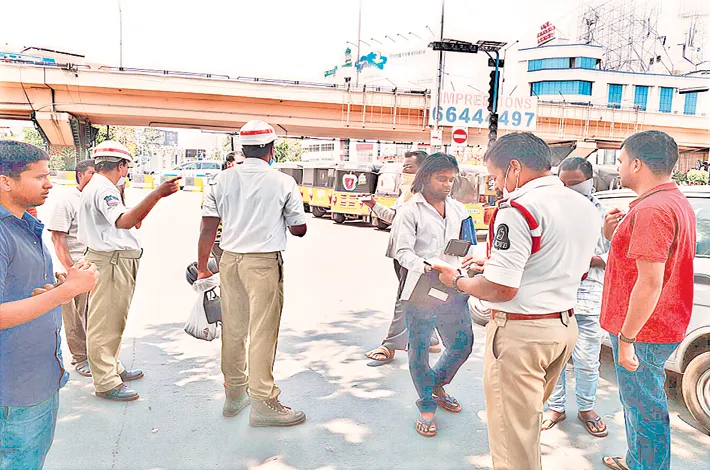
The Telangana High Court has issued a significant ruling restraining the police from stopping vehicles on the road and forcibly collecting pending traffic challans, reiterating that fines must be recovered only through due legal process and not through coercive roadside practices.
Justice NV Shravan Kumar of the Telangana High Court passed the order while hearing a writ petition filed by Secunderabad resident V. Raghavendra Chary, who challenged the Hyderabad Traffic Police’s method of enforcing traffic penalties. The court clarified that while citizens may voluntarily pay fines, police cannot compel payment during routine checks or use force, including confiscating vehicle keys, to secure compliance.
The petitioner argued that his vehicle was penalised based solely on photographs taken by traffic personnel using mobile phones and handheld cameras, without citing specific legal provisions. He particularly challenged a challan dated March 17, 2025, which imposed a Rs 1,200 fine for alleged triple riding, contending that it lacked statutory basis and was arbitrary.
Chary further submitted that penalties based on images captured through non-certified devices have no legal validity and must be supported by evidence from government-approved surveillance systems. His counsel, advocate Vijay Gopal, argued that current enforcement practices violate the Motor Vehicles Act, 1988, and the Central Motor Vehicle Rules. He also pointed out that Telangana had not fully adopted the enhanced penalty structure under the 2019 amendments, raising questions over the legality of higher fines being imposed.
A key issue before the court was whether police officers have the authority to determine and collect penalties. The petitioner maintained that under the Motor Vehicles Act, only judicial magistrates can decide punishment, and that allowing field-level officers to do so undermines the principle of separation of powers by blurring the line between enforcement and adjudication.
The petition also challenged Government Order No. 108 of 2011, which empowers traffic police to stop vehicles and collect compound penalties. Chary argued that the order is unconstitutional and repugnant to the Central Motor Vehicles Act, as it grants executive authorities powers that should rest exclusively with the judiciary.
During the hearing, the petitioner’s counsel highlighted that these enforcement practices disproportionately affect middle-class two-wheeler riders and warned against normalising procedural violations in the name of traffic management.