13 September, 2026 | 6:47 AM


Sebi board clears single window gateway for foreign investors
13-09-2025 01:45:28 AM
Minimum public offer size lowered for very large cos
The relaxation of initial public offering rules is expected to benefit mega IPOs including that of Reliance Jio Infocomm and the National Stock Exchange (NSE)
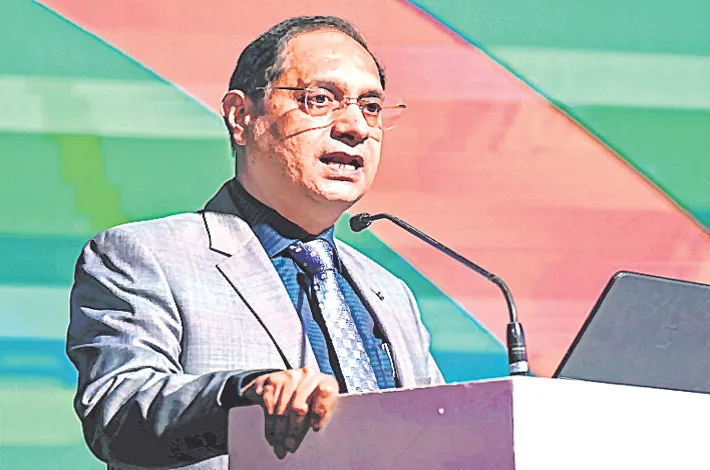
The Sebi board on Friday decided to make it easier for low risk foreign investors to participate in the Indian securities market with the introduction of a single window access, a move aimed at simplifying compliance and enhancing the country's attractiveness as an investment destination.
The new framework -- Single Window Automatic & Generalised Access for Trusted Foreign Investors (SWAGAT-FI) -- would provide easier investment access to low risk foreign investors, enable a unified registration process across multiple investment routes and reduce repeated compliance and documentation for such entities, Sebi Chairman Tuhin Kanta Pandey told reporters here after the board meeting.
The low risk foreign investors identified by Sebi include government-owned funds, central banks, sovereign wealth funds, multilateral entities, highly regulated public retail funds, and appropriately regulated insurance companies, as well as pension funds. "The board approved the introduction of the SWAGAT-FI framework for FPIs and ForeignVenture Capital Investors (FVCIs) with the objectives to facilitate easier investment access for objectively identified and verifiably low risk foreign investors, enable a unified registration process across multiple investment routes for these entities and minimize repeated compliance requirements and documentation for such investors," he said.
IPO rules for very large companies eased
Sebi on Friday decided to relax initial public offering (IPO) rules for very large companies and also extend the timeline by up to 10 years for them to meet minimum public shareholding norms.
The move is expected to benefit mega IPOs including that of Reliance Jio Infocomm and the National Stock Exchange (NSE).
The new framework, if implemented, would reduce the immediate dilution burden while still ensuring gradual compliance with public shareholding norms.
Under the new framework, companies with a market capitalisation between Rs 50,000 crore and Rs 1 lakh crore, would be required to float 8 per cent of their equity instead of the current 10 per cent. Such firms would also get a timeline of five years instead of the present three years for achieving minimum public shareholding (MPS) requirement of 25 per cent. For companies with a market capitalisation above Rs 1 lakh crore, mandatory offer requirements would be reduced to 2.75 per cent from the current 5 per cent, while those above Rs 5 lakh crore would need to dilute only 2.5 per cent.