12 October, 2026 | 3:59 AM


Tamil Nadu 2026: The great freebie race – Welfare, rights or fiscal danger?
31-03-2026 12:00:00 AM
The discussion also touched on industrial and infrastructure gaps. Residents in proposed tech hubs like Sriperumbudur and Madhavaram reportedly lack basic amenities such as drinking water pipelines
In Tamil Nadu, the 2026 Assembly election campaign has morphed into what many describe as the world’s most expensive shopping catalogue. As parties unveil their manifestos, the battle for Fort St. George which houses the state assembly has turned into an intense contest of promises aimed squarely at voters—especially women, who now form the decisive majority of the electorate.
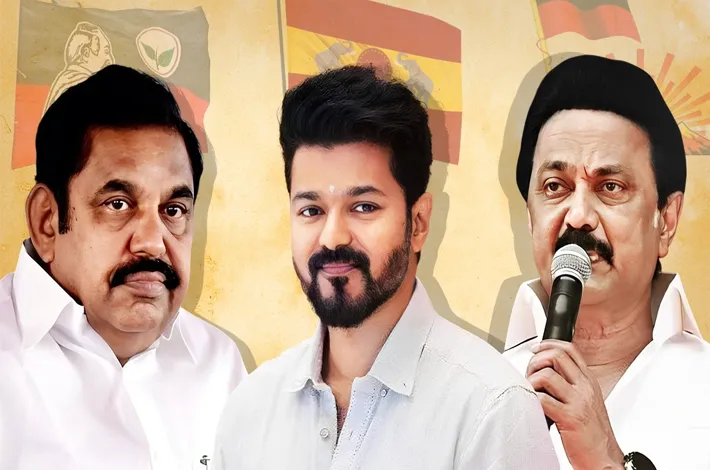
The incumbent DMK is doubling down on its Dravidian welfare model. It has hiked the monthly women’s assistance from Rs 1,000 to Rs 2,000 and is offering Rs 8,000 appliance coupons. Not to be outdone, the AIADMK is invoking its Amma legacy with ambitious pledges: free refrigerators, three gas cylinders per household, and extending free bus travel to men as well.
Meanwhile, actor-turned-politician Vijay and his Tamilaga Vettri Kazhagam (TVK) are attempting to disrupt this “freebie binary.” Instead of competing solely on direct handouts, TVK is pitching a “rights-based” model. It promises Rs 20 lakh collateral-free education loans and a legal guarantee for jobs, along with measures focused on women’s safety such as zero-tolerance policies on crimes against women, special police with body cameras, and “zero dark zones.”
A DMK spokesperson defended the party’s promises as an ideological document rooted in Dravidian principles of growth with equity. She emphasized that Tamil Nadu is not a sinking economy but one achieving double-digit growth (11.19%). According to her, nearly three-fourths of the state’s revenue comes from its own resources, not central transfers. The party argues that increasing women’s monthly aid, providing laptops and financial support to students, and promising 50 lakh jobs are investments in human capital that will fuel long-term economic boom and attract foreign investment.
She strongly rejected the “freebie” label, calling it an elite bias. She cited historical examples: colour televisions reduced domestic violence and increased awareness, while gas connections freed women from kitchen drudgery, boosting productivity. She pointed to new childcare centres as a way to raise women’s workforce participation, especially given Tamil Nadu’s strong female presence in factories.
In contrast, AIADMK spokesperson framed his party’s promises as “economic stimulus,” not reckless spending. He argued that every rupee given to households circulates back into the local economy through groceries, gas, and electricity bills. He highlighted AIADMK’s “stellar track record” on women’s safety, strict policing of drug menace (which he accused DMK of allowing to rise), and efficient welfare delivery during its earlier tenure despite natural calamities and COVID. He criticised the DMK for taking the state’s debt to historic levels while failing to deliver on many past promises.
A TVK spokesperson positioned his party as offering a more holistic and accountable alternative. He pointed out that TVK has already outlined plans for women—including Rs 2,500 financial aid, zero-tolerance on crimes against women, and safety measures like body-cam-equipped police. However, the party’s emphasis appears stronger on youth employment and systemic reforms. He accused the DMK manifesto of being full of “fake promises” and “repetitive lies,” citing low fulfilment rates of the 2021 pledges (claiming less than 10% delivered). He highlighted persistent issues with government job exams—paper leaks, delays, and coaching centre nexus—and promised a new Job Transparency Law to complete the entire recruitment process (from exam to appointment) within 365 days.
The discussion also touched on industrial and infrastructure gaps. Residents in proposed tech hubs like Sriperumbudur and Madhavaram reportedly lack basic amenities such as drinking water pipelines, raising questions about the gap between grand announcements and on-ground realities. AIADMK argued that while welfare is important, it must be calibrated with proper functioning of public sector units and revenue generation. The party leaders listed ground-level discontent: protests by teachers, nurses, and other sections plus recent milk shortages—issues they said never occurred under previous AIADMK rule.
At the heart of the debate lies Tamil Nadu’s mounting debt—projected at around Rs 9.52 lakh crore by March 2026. Critics argue that competitive populism, especially in an election year, risks unsustainable borrowing. Supporters counter that targeted welfare boosts consumption, empowers women and youth, and drives human development, which in turn supports economic growth. In a state renowned for its Dravidian welfare legacy, the 2026 election has intensified the long-standing tension between populist appeasement and sustainable governance.