12 October, 2026 | 5:01 AM


Excise duties on fuels slashed, how much will it benefit ?
31-03-2026 12:00:00 AM
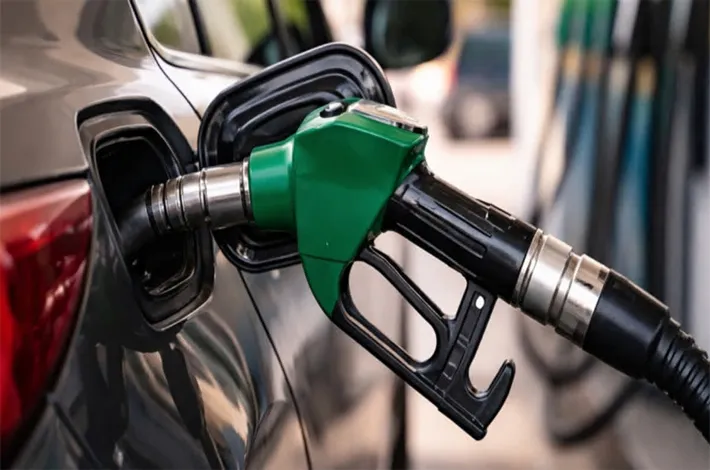
In a matter of weeks, crude prices have nearly doubled, triggering swift action from the government. Few days ago, a circular was issued slashing excise duties on petrol and diesel by a significant margin. Petrol excise duty has been cut from Rs 10 per litre to Rs 3 per litre, while diesel excise duty has been reduced from Rs 10 per litre to zero. The objective was straightforward: shield the common man from soaring fuel prices at the pump, ease the burden on oil marketing companies (OMCs), and absorb the global shock domestically. By taking this step, the government aims to prevent immediate price spikes that would hit household budgets and transportation costs hard.
India, which imports up to 80% of its oil needs, is particularly vulnerable. The country’s crude oil basket — the weighted average price of various varieties purchased from around the world — has doubled in just four weeks. Before the escalation of tensions (with the conflict referenced as beginning around late February), India was buying oil at approximately $69 per barrel, often at a slight discount compared to many other nations. By March 2026, that figure had surged to around $147 per barrel within about three and a half weeks. This represents a crippling increase for an import-dependent economy.
The government maintains that it is putting people first by absorbing the global shock and ensuring pump prices do not spiral out of control. In contrast, the opposition, particularly the Congress, has criticized the move as “too little, too late” and politically timed, especially with elections approaching. They argue that the relief offered is a mere pittance and accuse the government of still benefiting from “COVID taxes” imposed during the pandemic that have not been fully rolled back.
Opposition voices claim the central excise cut provides only limited support to oil marketing companies. They warn that if the conflict drags on, the government will eventually lack the resources to finance both its welfare schemes and the mounting losses of OMCs, forcing the burden onto consumers. The core question fuelling the debate is clear: Can India truly absorb this crude shock without passing on the pain to citizens, and if so, for how long?
A former Secretary in the Ministry of Labour and Employment and an economist, described the situation as highly challenging on multiple fronts. She highlighted the risk of imported inflation, the prospect of slower growth ending what was recently seen as a “Goldilocks period” for the economy, and mounting pressure on the rupee due to higher oil costs and foreign portfolio outflows. She emphasized that the excise duty cuts would add fiscal pressure, requiring careful policy fine-tuning to protect growth, MSMEs, labor-intensive sectors, and consumption at the bottom of the pyramid. While acknowledging India’s resilience, she stressed that the country is not immune to global shocks, which could also affect agriculture (via fertilizer costs), electronics, and other sectors.
A BJP Spokesperson countered by urging against panic. He pointed to the Modi government’s decade-long focus on protecting citizens from global headwinds. Despite facing COVID-19, the Russia-Ukraine crisis, and now the Iran-Israel escalation, India has maintained average inflation around 4-4.5% (compared to 10-12% in the previous era) and delivered steady growth of 6.5-7.5%. He highlighted massive social welfare spending (Rs 80-85 lakh crore over 10 years versus Rs 10-12 lakh crore earlier), repeated excise and tax relief measures, and strategic steps such as building petroleum reserves, diversifying oil imports across nearly 40 countries, boosting domestic production of gas (up 40%), ethanol blending, railway electrification, and pushing renewables and electric vehicles.
He noted that states ruled by opposition parties often impose higher VAT on fuel, and advised them to share the burden of relief. He stressed that India has strategic and commercial reserves providing significant buffer, and urged focus on preparation rather than panic, which he said only benefits certain political and commercial interests.
Another expert noted the enormous losses being incurred by oil marketing companies (around Rs 24 per litre on petrol and Rs 36 on diesel), estimating monthly under-recoveries near Rs 30,000 crore. While the excise cut provides some cushion (roughly Rs 15,000 crore per month), prolonged high prices could strain government finances by Rs 1.75 lakh crore annually on fuel alone, plus potential additional hits on fertilizer subsidies exceeding Rs 1.5 lakh crore. The consensus was that the government is currently between a rock and a hard place, determined to shield consumers but facing sustainability questions if the conflict extends beyond a couple of months.
The discussion underscored that someone will ultimately bear the cost — whether the government through fiscal measures, consumers through higher prices, or the broader economy through slower growth and inflation. At present, the government is absorbing the shock, but the duration it can continue doing so remains the critical unknown. The coming weeks and months will reveal whether the current policy balancing act can hold or whether tougher choices lie ahead.