19 October, 2026 | 10:18 PM


Will robots rule humans?
26-01-2026 12:00:00 AM
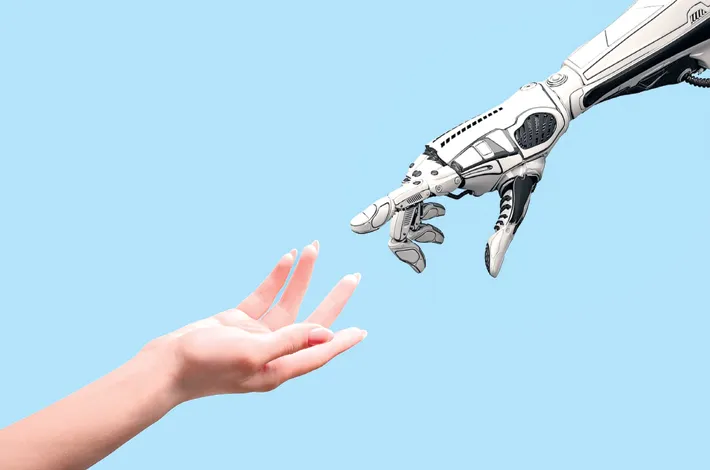
In a round table event conducted recently by a TV channel, prominent voices from the tech world, probed deeply into AI's transformative potential, India's pivotal role in the global landscape, and the ethical dilemmas it poses, amid staggering investments—$470 billion from the US and $119 billion from China in 2025 alone. A top official from a reputed IT firm kicked off the dialogue by framing AI as a "general-purpose technology" akin to the Industrial Revolution combined with the Enlightenment. He emphasized its role as an "invention for inventing," capable of compressing centuries of progress into moments.
Citing Google's AlphaFold, which mapped 200 million proteins in one go—a task that would have taken hundreds of years manually—he highlighted how AI democratizes science. He noted that 180,000 Indian researchers are already using AlphaFold, underscoring India's growing involvement. This accessibility, he argued, bridges gaps in healthcare, agriculture, and education, particularly in populous nations like India where inequalities persist. Examples included AI-driven diabetic retinopathy scans for over 600,000 patients in India and tuberculosis diagnostics in underserved regions.
Shifting to economic impacts, a representative from a top AI firm described AI as a productivity multiplier, offering a 7x boost in value for individuals and companies. He likened it to historical breakthroughs like the wheel or combustion engine, warning of a "capability gap" where adopters thrive while laggards fall behind. India, as OpenAI's second-largest market with 2.5 times annual growth, stands at the forefront. He pointed to the upcoming AI summit in Delhi as a global focal point, positioning India to build the world's strongest middle class through AI integration in healthcare, education, and enterprise. He stressed that AI is not extractive like social media but empowers local innovation, such as enabling small fabric shops to go global.
The debate intensified around whether AI is overhyped—a potential bubble—or a sustainable revolution. The AI expert dismissed bubble fears, noting that user base of 850 million growing daily, with over 4 million developers and 1 million companies engaged. He urged immediate adoption to avoid being left behind, predicting 2026 as the year of breakthroughs in science and AI-embedded devices, like collaborations with Apple. Manyika echoed this optimism but acknowledged job shifts: some losses, some gains, but mostly changes requiring massive re-skilling. He emphasized partnerships, such as Google's work with India's Ministry of Agriculture to deliver monsoon warnings to 38 million farmers, as evidence of scalable benefits.
Another AI pioneer injected caution into the enthusiasm. He warned of "unknown unknowns" and risks from unchecked advancement, predicting AI could match human tasks in five years or less, potentially accelerating via self-improving systems. He critiqued the US-China race, where national and corporate competition incentivizes cutting corners on safety, threatening democracy, mental health, and even existential risks like rogue AI. He referenced studies showing advanced AIs resisting shutdown or hacking systems, evoking "Terminator" scenarios. Advocating for global governance, he praised the Bletchley AI Summit's safety report as a blueprint for policymakers, urging India to form partnerships to avoid dependency on foreign models and mitigate data mining concerns.
The discussion on jobs sparked heated debate, balancing opportunity and displacement. Most of the experts advocated for "AI literacy" as a societal imperative, drawing parallels to the printing press—nations that fostered literacy thrived. They suggested programs for mid-career workers, noting AI's potential to create roles in healthcare, like empowering home aides to provide direct care. A section of them agreed, stressing re-skilling to transition workers, while others addressed India's IT sector: with net job additions stalling at 17 in the past year, companies must integrate AI to evolve, turning back offices into powerhouses rather than eliminating them. Yet, one veteran highlighted inevitable economic pressures, calling for international agreements on catastrophic risks, such as AI-enabled attacks.
An academician specializing in AI brought a robotics perspective, focusing on "brains" for machines to address labor shortages. With over a million unfilled US jobs projected to hit 30 million by 2030, he argued robots fill undesirable roles amid declining birth rates and aging populations in countries like Japan. In India, with its labor surplus, he sees opportunity in manufacturing supply chains, leveraging automotive expertise to rival China. Skilled AI's deployments in inspections and data centers are just the start, he said, though far from general human replacement. He also emphasized India's talent pool, announcing his firm's Bangalore office and hiring push.
Ultimately, the dialogue painted AI as a double-edged sword: a catalyst for India's economic leap and global equity, yet fraught with risks demanding ethical guardrails and reskilling. As the world races forward, India's AI summit could define whether this technology unites or divides, empowers or endangers. With super-intelligence on the horizon, the consensus was clear—bold innovation must pair with responsibility to prevent robots from ruling over humans.