10 October, 2026 | 5:32 PM


AP Govt tightens norms for nursing colleges
18-04-2026 12:00:00 AM
Metro India News | AMARAVATI
In a policy shift aimed at correcting imbalances in nursing education, the Andhra Pradesh government has decided to regulate the establishment of new nursing institutions based strictly on state requirements. Health, Medical and Family Welfare Minister Y. Satya Kumar Yadav announced that only proposals submitted in response to official government notifications will be considered, while unsolicited applications will no longer be entertained.
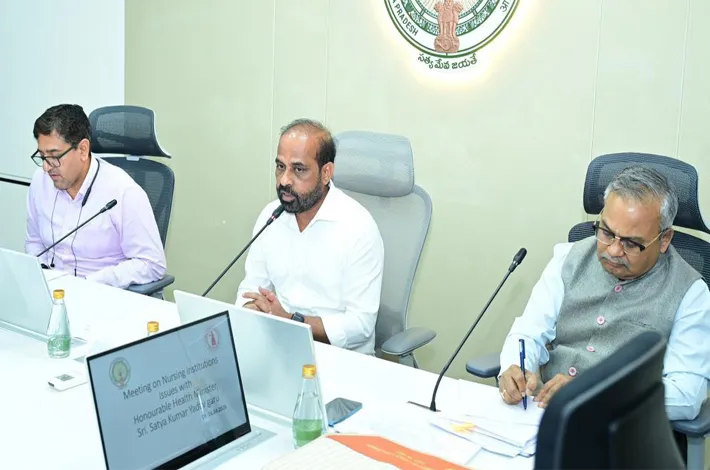
The decision comes amid concerns over the rapid proliferation of nursing colleges and a growing mismatch between seat availability and actual demand. Chairing a review meeting at the Secretariat in Velagapudi, the Minister said the move is intended to streamline the sector and ensure optimal utilisation of educational capacity.
Officials informed that the state currently has 691 nursing institutions producing nearly 32,000 graduates annually. However, around 6,000 seats have been going vacant each year, indicating oversupply. Since 2014, as many as 243 nursing colleges and schools were sanctioned, largely based on individual proposals submitted to successive governments.
Breaking from past practice, the current government had last year invited applications through a structured notification process, receiving around 345 proposals that are now under examination by a High Power Committee. The Minister clarified that future approvals will strictly follow this model, with limited exceptions for tribal and underserved regions.
The Minister also emphasised the need to align nursing education with evolving healthcare demands. He noted that sectors such as geriatric care, child healthcare, and mental health services are witnessing rapid growth and require specialised training.
“With the goal of generating large-scale employment by 2029, the healthcare sector alone offers over one lakh job opportunities. We must equip our nursing workforce with relevant, future-ready skills,” he said. In line with this, the government is planning to introduce postgraduate residency programmes in government nursing institutions to enhance clinical expertise.
The government has also decided to constitute a committee to review and rationalise fee structures in nursing institutions, ensuring affordability while maintaining quality standards.