19 October, 2026 | 6:18 PM


Can the “mother of all deals” offset “Trump’s tantrums”
27-01-2026 12:00:00 AM
Beyond economics, the agreement carries broader significance for global supply chains, potentially realigning them and fostering greater cooperation in high-tech, talent mobility, education, and even security domains
The India-EU Free Trade Agreement (FTA) appears to be on the verge of a major breakthrough after nearly two decades of negotiations. As of late January 2026, talks have reached the final stages, with an announcement and potential signing expected during the India-EU Summit on January 27, 2026, in New Delhi. This development coincides with the visit of European Commission President Ursula von der Leyen and European Council President Antonio Costa to India, where they serve as chief guests for the Republic Day celebrations on January 26.
Their presence underscores the deepening strategic and economic partnership between the two sides. The proposed FTA is often described as the "mother of all deals" due to its scale and implications. Bilateral trade in goods and services already exceeds $190 billion (with merchandise trade around $135 billion in recent figures), positioning the EU as one of India's top trading partners alongside the US and China.
Once finalized and ratified— a process that could take at least a year through the European Parliament—the agreement is poised to significantly expand this volume. For India, it opens access to a stable market of 27 nations, providing a vital alternative amid US tariffs (including 50% duties on certain Indian exports like textiles since late 2025). Key Indian sectors expected to benefit include textiles, jewelry, leather goods, pharmaceuticals, engineering products, automotive components, electronics, marine products, and select agricultural items.
From the EU's perspective, the deal supports supply chain diversification away from heavy reliance on China, while granting better entry into India's rapidly growing $4.2 trillion economy. European exports such as automobiles (e.g., Mercedes, Audi, BMW), beverages (including champagne and wines), and other luxury goods could become more competitive in India through reduced tariffs—reports indicate India may lower duties on certain imported cars to around 40%. The agreement also addresses long-standing hurdles, including agriculture sensitivities (with India protecting its dairy and non-GM crop sectors), data privacy, and other regulatory issues that had stalled progress.
The accelerated pace of negotiations reflects renewed political commitment from both sides, fueled by shifting global geopolitics. Renewed high-level engagement, combined with concerns over trade disruptions and supply chain vulnerabilities, has driven momentum. Experts highlight that the deal offers India maneuverability to offset export challenges from US policies, while enabling the EU to secure reliable alternatives amid global uncertainties.
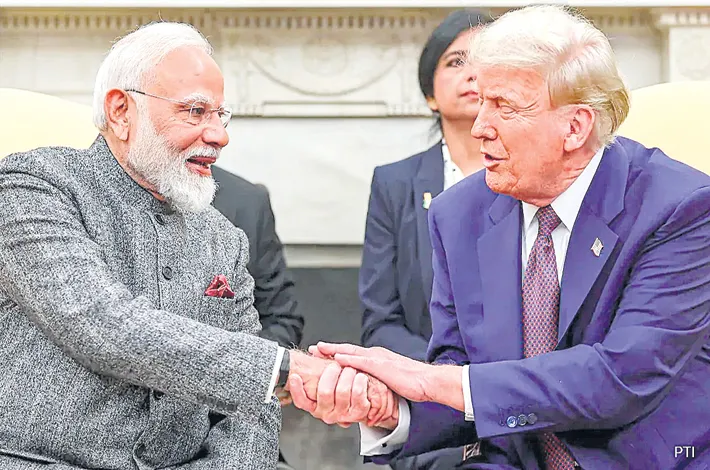
Economists, diplomats and geopolitical affairs experts noted it serves as a counterbalance to perceived unreliability in US trade relations under President Trump, including stalled bilateral deals and tensions (such as over Greenland). The FTA is seen as a win-win that promotes fair give-and-take, avoids one-sided concessions seen in past Indian agreements, and signals India's growing independence in trade diplomacy under Prime Minister Narendra Modi and Commerce Minister Piyush Goyal.
A former UK minister recalled attending the first EU-India summit 20 years ago under Tony Blair's presidency, where similar talks began but yielded little progress. He described the FTA as a "mega deal" that transcends normal scales, driven by the need for new partnerships in a post-Trump world. He stressed that while negotiations are complex, the EU has pursued this for decades, and India's leadership under Prime Minister Narendra Modi presents a prime opportunity.
A senior economist expressed optimism about the deal's rapid advancement, crediting Trump's influence for hastening what had stalled for 19 years. He pointed out that the EU, India's largest trading partner with bilateral trade at $135-136 billion, seeks to diversify supply chains away from China amid rising protectionism. He highlighted Europe's economic struggles, with countries like France, Germany, Poland, and Belgium facing sluggish GDP growth, making India's burgeoning middle class of 650-700 million people—an market double the size of the U.S. population—an attractive opportunity. He predicted that reduced tariffs would boost Indian exports in sectors like textiles, leather, footwear, chemicals, gems, jewelry, electronics, engineering goods, and pharmaceuticals, potentially elevating total bilateral trade to $250 billion in three years and $188 billion including services.
Beyond economics, the agreement carries broader significance for global supply chains, potentially realigning them and fostering greater cooperation in high-tech, talent mobility, education, and even security domains. As one analyst put it, it demonstrates how India and the EU are forging constructive ties in a fractured world, potentially pressuring other partners toward more balanced approaches. While ratification and implementation will require time, the impending milestone marks a pivotal moment in India's trade strategy and its relations with one of the world's largest economic blocs.
Is the ‘US tariffs episode’ reaching to an end?
The United States has signaled a potential rollback of additional punitive tariffs imposed on Indian imports, marking a notable shift in India-US trade relations. This development, highlighted by US Treasury Secretary Scott Bessent during remarks on the sidelines of the World Economic Forum in Davos in January 2026, comes after a sharp decline in India's purchases of Russian oil. The additional 25% tariff—layered on top of existing reciprocal duties, pushing totals to as high as 50% in certain sectors—was introduced in 2025 under the Trump administration.
It was specifically introduced to discourage India from buying discounted Russian crude amid the ongoing Ukraine conflict. Bessent described the tariff measure as a "huge success," pointing out that Indian refineries' purchases of Russian oil have plummeted dramatically in recent months. He emphasized that the policy's core objective—reducing Russia's energy revenues and promoting global energy diversification—has been largely achieved. This opens what he called a "clear path" to removing the extra 25% penalty, provided the trend in reduced Russian imports continues.
A US based professor of international relations framed the agreement within geopolitical shifts, asserting that it predates and surpasses Trump's influence, representing a broader fracture in the old world order. He described Trump as an "avatar" of this change, with nations pursuing strategic autonomy to avoid dependency on powers like China, Russia, or the U.S. Leam highlighted the push for multi-alignment and hedging bets, terms often associated with Indian foreign policy, as countries safeguard supply chains against tariffs or coercion.
From a geopolitical lens, he saw the EU hedging against a fracturing North Atlantic alliance, with Trump's "America First" ethos signaling the end of traditional multilateralism. He acknowledged that FTAs create winners and losers but viewed this as a tectonic shift toward a new multipolar order, where leaders like Modi, Von der Leyen, and Trump adapt without fully shaping it—a process that could take decades.
A retired Ambassador expressed hope for a swift rollback, noting that India's imports of Russian oil have indeed decreased—though not completely halted—due to market dynamics rather than direct government directives. India has maintained its commitment to free trade, allowing private and public sector companies to decide sourcing. He highlighted increased purchases from the United States as a contributing factor.
He criticized the selective targeting of India, pointing out that the European Union, the United States itself, China, Turkey, and others continue importing Russian energy. In his view, the extra tariffs have outlived their utility and should be lifted soon, especially given positive signals from Davos, including US President Trump's praise for Prime Minister Modi and indications of a potential strong trade deal.
A senior journalist and political commentator provided detailed context, outlining multiple reasons for the US shift beyond the official narrative. He emphasized the impending EU-India FTA and related agreements on defense, green tech, and more, which could bolster both economies and shield the global system from recession. Europeans, previously critical, now view India as "indispensable." He argued the US is reacting to avoid losing ground, using a mix of carrots (trade deals) and sticks (regional instability in Bangladesh or Pakistan).
On Russian oil, he dismissed claims of dramatic reduction as overstated: seasonal refinery maintenance, sanctions on specific Russian entities (like Rosneft and Lukoil), and natural quarterly dips explain much of the 12-15% fall, not US pressure. India has shifted some sourcing to the US and UAE, benefiting Trump politically. He also highlighted India's growing role in the secondary oil market (refining and exporting to Europe, including Ukraine), which irked competitors like Saudi Arabia's Mohammed bin Salman, who reportedly influenced US policy with investment promises.
A foreign affairs expert was the most skeptical, asserting that the pretext of substantial Russian oil reduction is unfounded, with data showing continued imports from unsanctioned Russian firms in December 2025. He argued India has largely ignored US pressure tactics, which were always likely to fail, as New Delhi refuses to open sensitive sectors like dairy, agriculture, fisheries, and poultry.
He tied the US pivot primarily to the looming EU-India FTA—including potential strategic intelligence sharing—which discomforts Washington amid its strained transatlantic ties. He described US actions as driven by a "containment strategy" but undermined by self-inflicted isolation from Europe, China, and South America, plus unrealistic expectations on Venezuelan oil flows.
Overall, while the US hints at tariff relief offer optimism for improved ties, the discussion portrayed it as driven by US self-interest amid shifting alliances rather than unilateral Indian concessions. The story remains evolving, with close monitoring needed on whether words translate into concrete action.