19 October, 2026 | 7:23 PM


is the party “disconnected” from cadres?
27-01-2026 12:00:00 AM
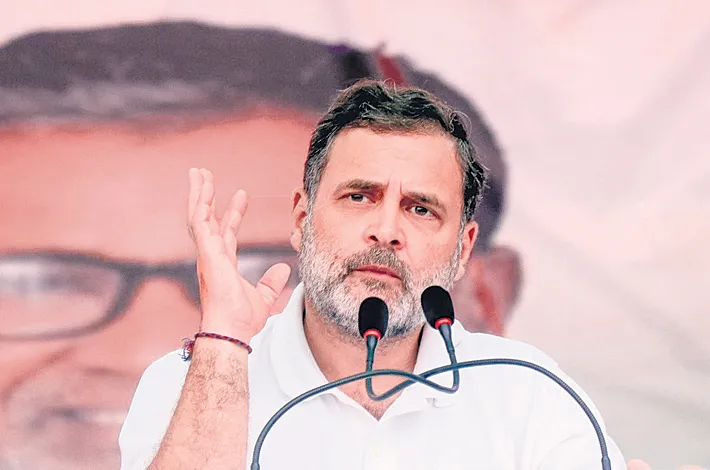
A senior journalist who is a long-time observer of the Congress, described the situation as a mix of factors, heavily influenced by political timing. He noted that many disgruntled voices belong to Muslim leaders who feel marginalized since the BJP's rise, with fewer nominations for them in key positions like Rajya Sabha. He labelled some critics as "political discards" engaging in posturing, though he acknowledged the weight in cases like Tharoor's
The Indian National Congress, one of India's oldest political parties, is grappling with mounting internal dissent as former leaders voice sharp criticisms against its leadership, particularly Rahul Gandhi. In recent developments, ex-Union Minister Shakil Ahmed, who resigned ahead of the Bihar elections, has accused the party of lacking internal democracy, claiming that Rahul Gandhi's decisions are final and unchallenged. Ahmed, a prominent Muslim leader, alleged that Gandhi acts like a boss, harbours a sense of superiority due to his Nehru-Gandhi lineage, and is uncomfortable with senior leaders.
This comes amid broader claims that the Congress is ignoring its Muslim leadership, a sentiment echoed by another former leader, Rashid Alvi, who criticized Gandhi for being inaccessible. The Bharatiya Janata Party (BJP) has seized on this crisis, labelling the Congress as a "party of deceit" that exploits Muslim votes without prioritizing their welfare. Similarly, Odisha Congress leader Muhammad Mokim lamented in November 2025 that he had been unable to meet Rahul Gandhi for three years, declaring the party "dying."
The chorus of criticism extends beyond these figures. Shashi Tharoor, known for his love-hate relationship with the party, has called for serious introspection. Mumtaz Patel, daughter of the late influential Congress leader Ahmed Patel, accused the party of vesting power in those disconnected from grassroots realities. The allegations also sparked a heated debate on whether the Congress undermines its own talent, contributing to the departure of young and capable leaders. Other allegations include ticket manipulation and delays in candidate announcements.
A senior journalist who is a long-time observer of the Congress, described the situation as a mix of factors, heavily influenced by political timing. He noted that many disgruntled voices belong to Muslim leaders who feel marginalized since the BJP's rise, with fewer nominations for them in key positions like Rajya Sabha. He labelled some critics as "political discards" engaging in posturing, though he acknowledged the weight in cases like Tharoor's. He emphasized that internal democracy often strengthens when a party is out of power, allowing sidelined members to speak freely.
An upcoming Congress leader defended the party, attributing the public airing of grievances to the natural dynamics of a party out of power. He compared it to generational shifts in other parties, like the BJP sidelining veterans such as L.K. Advani and Murli Manohar Joshi, or the Samajwadi Party diminishing Shivpal Yadav's influence. He dismissed claims of the Congress marginalizing Muslims by highlighting Imran Pratapgarhiya as a prominent star campaigner. He argued that not every leader can meet the top brass in a vast organization, and mechanisms like state in-charges and the Congress Working Committee (CWC) exist for redressal.
A section of political analyst however dismissed Ahmed's criticisms as typical post-resignation outbursts, common across parties. They noted that Ahmed had previously praised Rahul Gandhi extensively while in the party, questioning his credibility now. They also drew parallels with the BJP, citing examples like Prashant Kishor, who accused Narendra Modi and Amit Shah of arrogance and centralization after quitting. One such analyst referenced other BJP defectors, such as Yashwant Sinha and Subramanian Swamy, who have criticized Modi-Shah's leadership for fostering fear and autocracy. He argued that if such claims against the BJP are not taken seriously, Ahmed's should be viewed similarly, emphasizing that internal criticism is a staple of politics.
BJP leaders, on the other hand, point out at the irony of a party historically accused of Muslim appeasement now facing accusations of sidelining its Muslim leaders. They pointed to Shakil Ahmed's post-election resignation, where he claimed senior leaders were absent during losses and questioned unproven allegations of vote theft. Ilmi argued this reflects Rahul Gandhi's insecurity, a communication breakdown, and the party's confusion in balancing Hindu and Muslim outreach. They also cited Ghulam Nabi Azad's past remarks about Muslims being kept away from rallies to woo Hindus, underscoring what they called the Congress's “faltering secularism.”
The discussion shifted to internal democracy comparisons between parties. BJP leaders mocked the Congress's claims, noting Shakil Ahmed's assertion that the high command—dominated by the Gandhi family—controls everything from state presidents to decisions. A BJP spokesperson praised his party’s merit-based selection of relatively unknown grassroots workers as presidents, citing examples like Nadda and Nadda Nabin, and emphasized that BJP presidents owe allegiance to the party, not a family.
Congress leaders however challenged this, arguing BJP selections are unanimous without elections, creating allegiance to a select group. One leader pointed out to the 2022 contest Congress presidential elections where Mallikarjun Kharge defeated Shashi Tharoor via secret ballot among 9,000 delegates, demonstrate real process, even if the Gandhi family's influence is undeniable. He contrasted Kharge's rise from humble origins with the BJP president's background, tied to a prominent political family.
The debate underscored deep divisions in Indian politics, with Ahmed's exit interview highlighting perceived autocracy in Congress. As the Congress navigates this storm, the episode underscores a party at a crossroads, where legacy, leadership, and electoral viability intersect. Whether these criticisms prompt reform or deepen divisions remains to be seen, but they highlight the challenges of maintaining unity in opposition.