29 September, 2026 | 10:54 PM


Centre plays Wait-and-See on TG’s 16 pending JNVs
03-02-2026 12:00:00 AM
metro india news I hyderabad
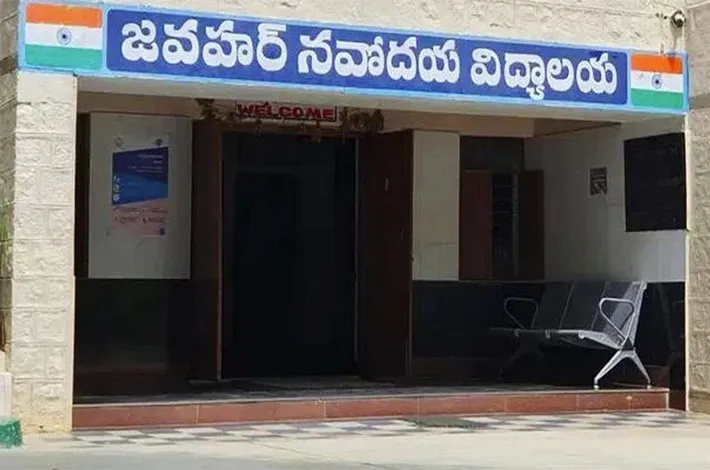
It seems Telangana must bide its time a little longer to secure 16 additional Jawahar Navodaya Vidyalayas (JNVs), paving the way for one elite residential school in every district. The Central government remains non-committal on this persistent request from the state, even as Chief Minister A. Revanth Reddy has personally championed the cause on multiple fronts. Currently, Telangana boasts 16 sanctioned JNVs, with 15 already operational and one in Sangareddy yet to commence classes, highlighting a gradual expansion of these prestigious institutions aimed at nurturing rural talent.
This update emerged from a parliamentary exchange in the Lok Sabha. On February 2, Union Minister of State for Education, Jayant Chaudhary, responded to an unstarred question posed by Telangana MPs Chamala Kiran Kumar Reddy and Eatala Rajender. The query delved into Telangana's proposals for 23 new JNVs, recent approvals for seven, and the status of requests for the remaining 16. Chaudhary underscored the Navodaya Vidyalaya Scheme's goal of establishing one NV per district nationwide, but emphasised that progress hinges on state governments providing free land and temporary facilities. No specific timelines or funding details were committed for the pending requests, reflecting the Centre's procedural stance.
In a boost last December 2024, the Centre greenlit 28 new NVs across India, including seven in Telangana: Jagtial, Nizamabad, Bhadradri-Kothagudem, Medchal- Malkajgiri, Mahabubnagar, Sangareddy, and Suryapet. These join the older establishments, bringing the total to 16. However, the state has urged sanctions for the rest in districts like Hanmakonda, Jangaon, Jayashankar Bhupalpally, Jogulamba Gadwal, Mahabubabad, Medak, Mulugu, Narayanpet, Peddapalli, Rajanna Sircilla, Vikarabad, Wanaparthy, Yadadri-Bhuvanagiri, Nirmal, and Adilabad—aiming to cover all 33 districts.
In a significant step towards operationalising the approvals, classes at the seven newly sanctioned Jawahar Navodaya Vidyalayas in Telangana commenced in the current academic year (2025-2026). These institutions were located in Bhadradri Kothagudem, Jagtial, Mahabubnagar, Medchal-Malkajgiri, Nizamabad, Sangareddy, and Suryapet districts.
JNVs, known for their rigorous academics and holistic development, have deep roots in Telangana. The state's sanctioned Jawahar Navodaya Vidyalayas span several decades, starting with the earliest establishments in the late 1980s. Kamareddy leads the list, having been sanctioned in 1986-87 and currently functional. Following closely are Karimnagar and Khammam, both sanctioned in 1987-88 and operational. Kumuram Bheem Asifabad, Nalgonda, Ranga Reddy, and Siddipet were also approved in the same year, 1987-88, and all remain functional today.
The expansion continued into the early 1990s with Warangal, sanctioned in 1991-92 and functional, followed by Nagarkurnool in 1993-94, which is also operational. A significant recent wave of approvals came in 2024-25, adding several more to the roster. These include Jagtial, Bhadradri-Kothagudem, Mahabubnagar, Medchal-Malkajgiri, Nizamabad, and Suryapet, all of which are now functional. Rounding out the list is Sangareddy, also sanctioned in 2024-25 but currently non-functional as it awaits full operational status.
These schools, funded centrally, prioritize rural students through entrance exams, fostering equality in education. While the recent approvals signal momentum, the state's push for full coverage underscores a broader quest for educational equity. As Telangana awaits further nods, the focus remains on collaborative efforts to unlock these gateways to opportunity for thousands of young minds.