31 August, 2026 | 9:21 PM


Debt metrics of India & GDP
03-02-2026 12:00:00 AM
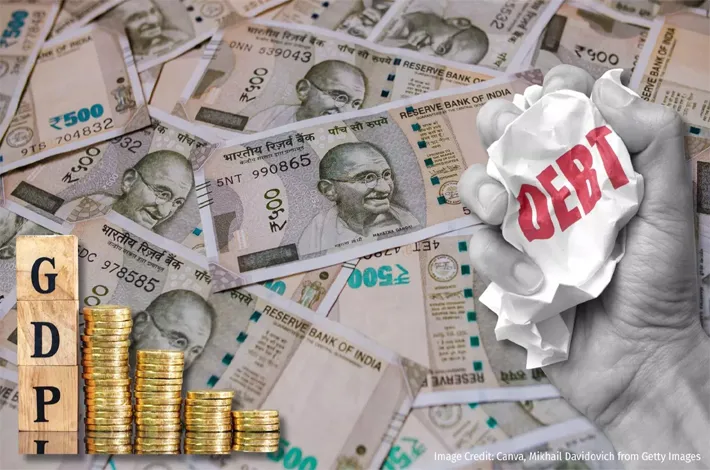
Expenditure of the government is funded mostly by taxes and borrowings. Citizens pay current period taxes out of their current period earnings. Borrowings are repaid out of current and future period taxes which are part of overall tax collection from the taxpayers. Taxpayers will not welcome higher taxes which pinch them in the current period. Higher borrowings will pinch them in future when government repays debt as the latter must be funded only by taxes although in the future.
Borrowings will not trouble the taxpayers if government borrowings translate into significant increase in incomes of the taxpayers. There is no foolproof method to determine if government borrowings caused increase in revenue of all the taxpayers. There have been evidences that borrowings negatively impact the taxpayers. More so when the borrowings are used to support revenue expenditure and particularly subsidies.
There have also been evidences that due to high borrowings and subsidies economies met with hyperinflation, recession, impoverishment, and fiscal crisis. Therefore, economy’s health and resilience are understood using debt position metrics. Interest to revenue is a simple ratio which shows the burden of debt servicing on the budget. Debt to tax is a cautionary measure which shows how many years tax revenue can repay the total debt.
Other metrics including external debt to GDP (gross domestic product) and forex reserves to external debt are also used. However, the two most effective ratios are fiscal debt and debt-to-GDP. Debt to GDP indicates fiscal sustainability since debt has to support higher GDP. Globally the debt to GDP ratios have been varied. Kuwait and Hong Kong have lowest ratios between 3% to 9%. Japan has highest ratio of 200% plus. Venezuela has more than 300%. UK has 100%, US has 130%, China has 80%, Brazil has 85%, and South Korea has 50%. India’s debt to GDP has fluctuated variedly depending on the extant situations. This is appreciable since situation dependent higher ratios are not unwelcome.
It reduces inflation, and crowds in the private sector investments, guides the government to lower unproductive subsidies, and to rationalize taxes. In the recent past, India has been faring well on the two main operational tools which are fiscal debt as a percentage of GDP, and debt-to-GDP. Current year budget reaffirmed the focus to target debt-to-GDP at 55.6% and fiscal deficit at 4.3%, both with a reasonable improvement from previous years higher levels of 56.1% and 4.4% respectively.
Sustaining these debt levels and tapering further will benefit the economy. Needless to state that India is a capital shortage economy and needs more funds to support its capex and infrastructure projects. Thus, targeted lower debt levels augurs well for India.
- Dr.Kishore Nuthalapati
The author is CFO of Bekem Infra Projects Pvt Ltd.