19 October, 2026 | 8:31 AM


Naravane's moment of truth
03-02-2026 12:00:00 AM
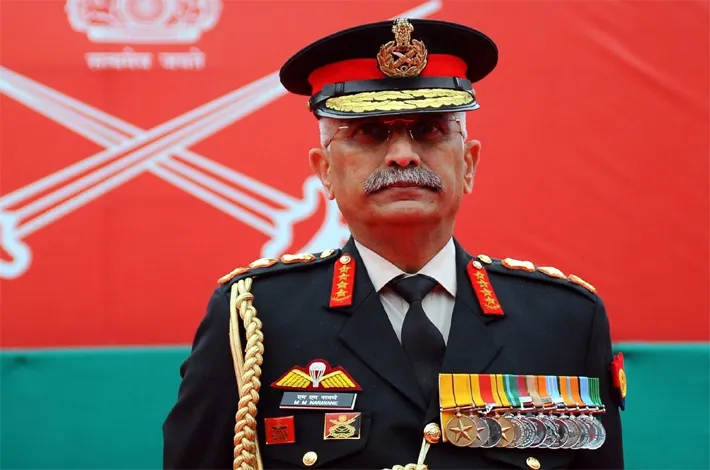
An army chief’s unpublished memoir exposes how the Modi government spun the China border crisis" refers to a feature article in the February 2026 issue of The Caravan magazine. Written by consulting editor Sushant Singh, it draws on excerpts from former Chief of Army Staff General Manoj Mukund Naravane's memoir Four Stars of Destiny, which remains unpublished due to ongoing Ministry of Defence review.
The piece argues that Naravane's account reveals discrepancies between the government's public narrative and the ground realities of the 2020 eastern Ladakh standoff with China, including alleged political indecision, territorial setbacks, and strategic communications that downplayed Chinese aggression he 2020 crisis began in early May when People's Liberation Army (PLA) troops crossed the Line of Actual Control (LAC) at multiple points in eastern Ladakh, leading to aggressive patrolling restrictions, infrastructure build-up, and physical clashes.
The most serious incident occurred on June 15 in Galwan Valley, where 20 Indian soldiers were killed in hand-to-hand combat—the first fatal border clash since 1962. India later acknowledged Chinese casualties but never officially confirmed the number. The standoff expanded to Depsang Plains, Pangong Tso, Gogra-Hot Springs, and other friction points, with both sides deploying tens of thousands of troops and heavy weaponry at high altitudes.
The Modi government consistently projected control and resolution. Prime Minister Narendra Modi stated in June 2020 that "na koi ghusa hai, na koi ghusa hua hai" (no one has intruded, nor is anyone present inside), implying no territorial loss. Defense Minister Rajnath Singh and other officials emphasized India's robust response, eventual disengagement agreements (beginning in July 2020 and continuing in phases), and restoration of status quo ante.
Official briefings highlighted tactical victories, such as pre-emptive occupations of heights on the south bank of Pangong Tso in late August 2020.The Caravan article contends that Naravane's memoir contradicts this framing. A central episode is the night of August 31, 2020, when PLA forces moved tanks and troops toward Rechin La pass.
Naravane reportedly sought clear orders from Singh, who responded, "Jo uchit samjho woh karo" (do whatever you deem appropriate). Naravane describes a flurry of calls involving the National Security Advisor, External Affairs Minister, and Chief of Defense Staff, but no decisive political directive. Weighing India's COVID-19 crisis and economic fragility, he opted for a forward deployment of Indian tanks as a "game of bluff"—positioning armor on dominant ground.
The PLA reportedly withdrew, averting escalation. The article frames this as evidence of absent political leadership, forcing the army chief to shoulder operational and strategic responsibility without explicit top-level backing. The piece further alleges that the government spun the crisis by minimizing Chinese gains. It points to persistent PLA hold on Depsang Plains, where Indian patrols to traditional points were blocked, and "finger" areas along Pangong Tso, where buffer zones limited Indian access.
These restrictions, the article suggests, amount to de facto territorial loss, contradicting Modi's blanket denial. Singh's article also highlights the public-relations fallout after Galwan, portraying the government as prioritizing narrative control over full disclosure of intelligence failures, inadequate border infrastructure, or delayed military mobilization. The revelations gained fresh political traction on February 2, 2026, when Leader of Opposition Rahul Gandhi quoted excerpts in Lok Sabha during discussions on national security and China. He reportedly cited Naravane's account of the Rechin La episode and broader criticisms of decision-making.
Treasury benches erupted, with Defence Minister Rajnath Singh and others objecting that quoting an unpublished, un-cleared memoir was inappropriate and potentially damaging to morale and security protocols. The incident underscores how the memoir—though unreleased—has become a lightning rod in partisan debates over the government's China policy.
Naravane's manuscript has been in limbo since at least 2024, with the Army and MoD reviewing it for sensitive content. The former chief has stated that the responsibility for clearance lies with the publisher and ministry. Similar memoirs by retired officers (e.g., on Kargil or surgical strikes) have faced scrutiny but were eventually published. The delay here fuels speculation that the government seeks to suppress details that challenge its "strong on national security" image.
From an analytical standpoint, the episode raises larger questions about civil-military relations in India. The delegation of high-stakes decisions to military leadership in the absence of explicit political guidance risks blurring accountability lines. It also highlights tensions between operational autonomy and the need for political oversight in nuclear-armed rivalries. If accurate, Naravane's portrayal suggests the government prioritized domestic optics—projecting invincibility amid a pandemic—over candid assessment of strategic setbacks.
Critics may view The Caravan's framing as selective or ideologically driven, emphasizing failures while downplaying diplomatic and military achievements like multi-round corps-commander talks and partial disengagements. Supporters of the government argue that no territory was permanently ceded, that India seized tactical advantages (e.g., south-bank heights), and that ongoing friction reflects China's unilateralism rather than Indian weakness.