29 September, 2026 | 8:53 PM


Kushaiguda: Reinventing its past glory
03-02-2026 12:00:00 AM
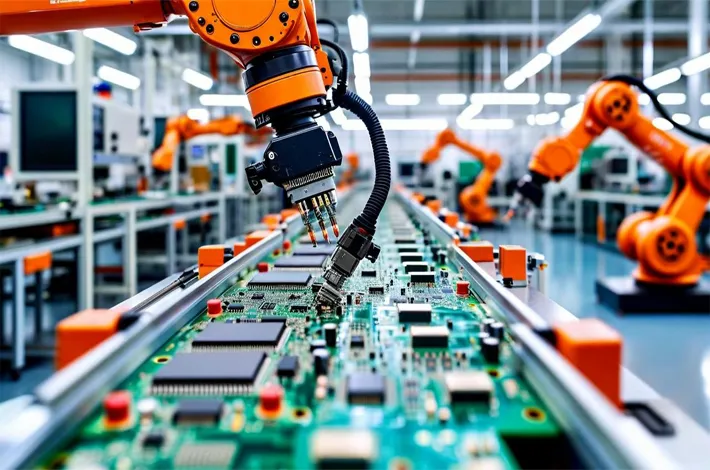
A provision of Rs 1,000 crore has been made for ISM 2.0 in FY 2026–27, building on the groundwork laid by ISM 1.0, which expanded India’s semiconductor design and manufacturing capabilities
hema singuluri I hyderabad
The new investment and funding support, new-age jobs and a decisive push to cut India’s dependence on imports form the backbone of the Union Budget 2026–27, as Finance Minister Nirmala Sitharaman rolled out a renewed strategy for the electronics, semiconductor and IT sectors.
At the center of this initiation, is the launch of India Semiconductor Mission (ISM) 2.0, a major expansion of government support for chip-making and allied industries, alongside tax certainty measures aimed at strengthening India’s global IT competitiveness.
Presenting the Budget for the financial year 2026–27, Sitharaman said the government’s focus is on building a complete electronics and technology ecosystem that attracts long-term investment, generates high-skill employment and reduces reliance on imported components. The measures, she said, are designed to position India as both a manufacturing base and a global technology partner.
The mission marks as the next phase of India’s semiconductor journey, and will focus on producing semiconductor equipment and materials, developing full-stack Indian intellectual property, and strengthening supply chains that are critical to national security and economic resilience. A provision of Rs 1,000 crore has been made for ISM 2.0 in FY 2026–27, building on the groundwork laid by ISM 1.0, which expanded India’s semiconductor design and manufacturing capabilities. To sustain this momentum, the Budget proposes to raise the outlay for electronics manufacturing support to Rs 40,000 crore.
Experts Take on the Major Step
Industry experts believe the combined impact of manufacturing incentives and tax reforms will be felt strongly in established electronics clusters such as Kushaiguda in Hyderabad, home to Electronics Corporation of India Limited (ECIL) and a dense network of ancillary units.
Jai Dinesh, General Manager for Corporate Business Development and Marketing at ECIL , said the Budget’s impact would be broader than many expect. He pointed out that government support has already eased the availability of semiconductor components and helped rationalize import processes, including charges and timelines, with a typical importation period of around two years. While some imports will continue in the short term, he said domestic capacity is steadily improving due to sustained policy support.
According to Dinesh, new job opportunities will emerge not only in Kushaiguda but across Hyderabad as semiconductor-related manufacturing and support operations expand.
He stressed that government backing is improving long-term job security in the sector, benefiting not just the country but also investors and skilled manpower at an international level. "The country should definitely go for exportation segments to meet the future demand", he added.
Dinesh highlighted the importance of research and development, noting that tax easing measures are particularly helpful for companies investing in innovation. He added that the electronics communications industry is deeply interconnected with several other sectors, especially electromechanical systems, making ecosystem development critical. On the specific impact on Kushaiguda, he said outcomes would depend on the direction of investment, market demand, production focus, and the type of expertise being hired.
Major electronic hubs- Hyderabad’s Kushaiguda
Kushaiguda’s relevance lies in the fact that semiconductor manufacturing does not exist in isolation. A chip fabrication plant is a highly specialized facility that produces integrated circuits on silicon wafers, but it depends heavily on a surrounding ecosystem of electronics design, testing, packaging, automation, sensors and power electronics.
With reduced compliance burdens and tax relief improving retained capital, smaller firms and MSMEs around ECIL are expected to benefit significantly through expansion, hiring and better wages. Reduced import dependence also opens local sourcing opportunities, as government agencies and public sector undertakings are likely to prefer domestic suppliers.
While large chip fabs may be in other states, experts note that Hyderabad is emerging as a key beneficiary of the semiconductor value chain through design, R&D and electronics manufacturing support. With hubs like ECIL–Kushaiguda, the city is positioned to play a critical role in India’s semiconductor ecosystem, generating high-skill jobs and strengthening the country’s long-term technology base.