20 October, 2026 | 12:11 AM


Cigarette prices hike- how effective will it be?
25-01-2026 12:00:00 AM
A spokesperson for the Federation of Retailers Association of India, voiced acute fears for small kirana stores, street vendors, and paan shops. Cigarettes are a staple high-turnover item in every nook
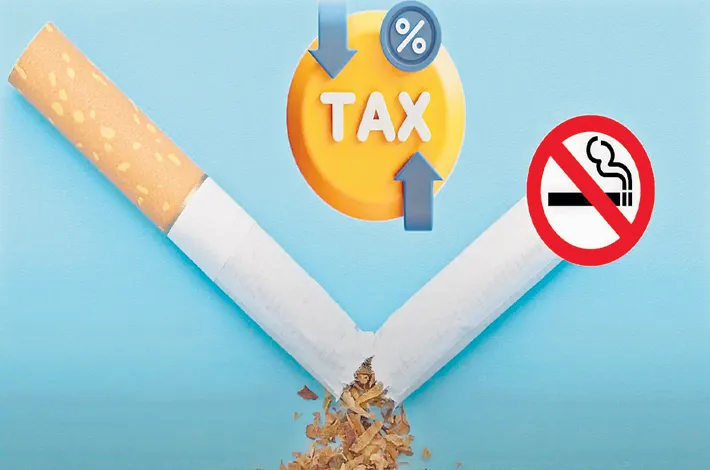
The Indian government has announced a significant overhaul of the taxation system for cigarettes and tobacco products, effective from February 1, 2026. This change ends the GST compensation cess on these items and introduces a new regime featuring a separate central excise duty layered on top of the existing GST. The move has sparked widespread debate, with estimates suggesting cigarette prices could rise by 60-70% or more in some categories, depending on length and type (e.g., filtered vs. non-filtered, with longer sticks facing steeper duties ranging from Rs 2,050 to Rs 8,500 per 1,000 sticks). Tobacco products now largely fall under a 40% GST slab (with bidis at 18%), making this one of the sharpest adjustments in recent years.
The policy aims to address public health concerns by discouraging tobacco consumption, which carries substantial social and healthcare costs. Proponents argue that higher taxes on "sin goods" like cigarettes help offset negative externalities, such as increased burden on the healthcare system due to smoking-related diseases. The decision, approved by the GST Council and Parliament, reflects a multi-stakeholder approach involving the Ministries of Finance and Health, as well as international frameworks like the WHO Framework Convention on Tobacco Control (FCTC).
A spokesperson for the Federation of Retailers Association of India, voiced acute fears for small kirana stores, street vendors, and paan shops. Cigarettes are a staple high-turnover item in every nook; disproportionate hikes could devastate margins already squeezed by quick commerce. He warned that unaffordable legal prices would funnel consumers to smuggled or counterfeit options (often half or quarter price, sans warnings or taxes), potentially compelling honest retailers into illegal sales to retain business. Retailers welcome GST reforms but demand calibrated, India-contextual taxation—not extremes that erode livelihoods of the poor and fuel illicit channels.
A former senior official of the Central Board of Indirect Taxes and Customs (CBIC) and a think-tank member focused on anti-smuggling, defended the policy as a deliberate GST Council outcome involving Centre and states, debated in Parliament, and enacted via amendments to the Central Excise Act. He explained the length-based excise as a longstanding principle—longer cigarettes imply greater potential harm and consumption, warranting higher duties.
He acknowledged illicit trade but highlighted enforcement efforts, including seizures by CBIC and the Directorate of Revenue Intelligence (DRI). He emphasized balancing revenue (cigarettes are a key but not dominant source), Ministry of Health concerns (e.g., pictorial warnings), and smuggling risks, while noting that inelastic demand ensures some illicit activity persists regardless. He challenged calls for an economist-defined "optimal rate," arguing multiple factors—including social costs—shape the structure.
Another senior office bearer of the Federation of All India Farmers Associations, spotlighted rural distress in low-rainfall, cyclone-prone areas (e.g., coastal Andhra Pradesh, 150-300 mm annual rain). Tobacco is among the few viable commercial crops, with Central Tobacco Research Institute studies confirming no profitable alternatives (Bengal gram suffers from imports and low prices; red gram lacks remuneration). With about 45 million people in rural chains dependent, domestic demand erosion from illicit shifts could devastate incomes, especially post-COVID export volatility. Farmers criticized the government's tax-only focus, ignoring FCTC Articles 17-18's call for gradual, supported crop transitions without roadmaps or aid.
The discussion highlighted complex trade-offs: public health gains versus livelihood hits for millions in farming/retail chains, revenue risks from smuggling, and enforcement gaps. As February 1, 2026, nears (with current date January 23, 2026), industry warnings of volume shifts, stock plunges (e.g., ITC impacts), and calls for review persist. The round table concluded hoping for post-implementation evaluations to assess real effects on prices, consumption, illicit flows, farmer incomes, and collections—underscoring the delicate balance needed in India's tobacco policy landscape.