21 October, 2026 | 3:00 AM


Doom scrolling addiction: Real or hyped?
23-01-2026 12:00:00 AM
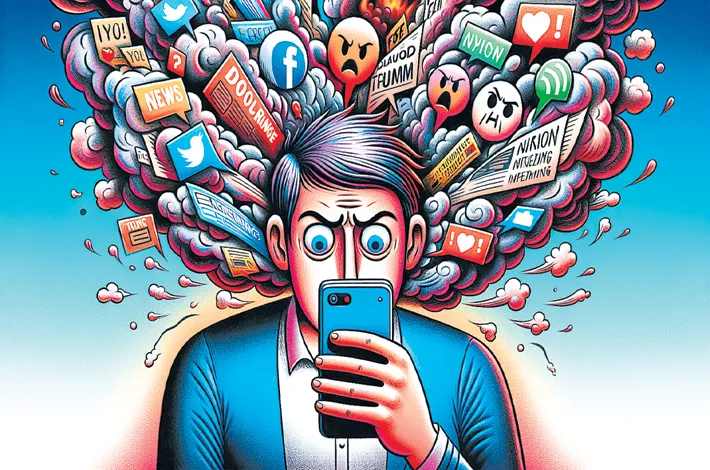
The rise of short-form videos has transformed how we consume content online. Platforms like TikTok, Instagram Reels, and YouTube Shorts deliver endless streams of quick, bite-sized clips that demand minimal effort and provide instant gratification. This habit of scrolling, swiping, and repeating has become a daily routine for millions, but a growing body of evidence suggests it is quietly reshaping our brains in concerning ways.
"Brain rot" emerged as Oxford's Word of the Year for 2024, defined as the deterioration of mental or intellectual state due to overconsumption of trivial, low-quality online content. The term, with roots tracing back to Henry David Thoreau's Walden, gained massive traction in recent years amid exploding short-video usage. Trends like absurd viral memes internet slang infiltrating everyday speech exemplify this phenomenon—fast, context-free, and engineered for repetition rather than depth. Algorithms prioritize what keeps users hooked through novelty and quick rewards, pushing aside content that requires sustained thought.
Research increasingly links heavy short-form video consumption to negative cognitive effects. A comprehensive review of 71 studies involving nearly 100,000 participants found strong associations between frequent use and poorer cognition, particularly in attention span and impulse control. Another synthesis of 14 studies echoed this, connecting heavy exposure to shorter attention spans and reduced academic performance. Users often struggle with slower, effort-intensive tasks like reading or problem-solving, as the brain habituates to rapid stimulation. The brain's reward system, driven by dopamine surges from novel clips, becomes overstimulated, reinforcing compulsive scrolling while desensitizing individuals to less immediately gratifying activities.
Beyond cognition, the impacts extend to mental health. Excessive use correlates with higher levels of depression, anxiety, stress, loneliness, and social isolation. Poor sleep is common, exacerbated by late-night scrolling that suppresses melatonin by up to 40% and disrupts deep sleep—when the brain "cleans" itself. Some experts question whether rising ADHD diagnoses (e.g., 1 in 9 U.S. children by 2022) partly reflect media-shaped symptoms, though causation remains unproven.
Neurologists explained the neurological triggers: rapid, shallow content activates the dopamine reward pathway—similar to sugar or pleasurable activities—creating a cycle of craving more stimulation. This leads to reduced deep sleep, brain fog, and disinterest in slower tasks like classroom lectures. Children, accustomed to high stimulation, find traditional learning boring and resist deeper problem-solving.
Tech experts however emphasized that platforms have mastered capturing attention more efficiently than ever. What began with long-form content has evolved into ultra-short formats, with average watch times dropping to mere seconds. They argued that while not all short content is harmful—some exposure can aid early learning—excess is the issue. They advocated practical steps: limiting daily time (e.g., 20 minutes sessions), shutting notifications, using grayscale mode to reduce appeal, apps like Forest for gamified restraint, supervised viewing, and tools like YouTube Kids or feature phones without social media.
A Child psychologist highlighted the psychological hooks: zero-effort pleasure bypasses the prefrontal cortex (thinking brain) and directly rewards the limbic system (emotions), offering escape from stress. She stressed intentional screen time over zero usage—establishing routines to reduce dopamine unpredictability and improve emotional regulation. Parents often struggle with control, facing peer pressure from children comparing screen allowances.
A neurologist delved deeper into long-term brain changes: repeated scrolling may alter gray matter (linked to thinking, creativity, focus, and emotion regulation) in frontal areas, and white matter (communication pathways), impairing impulse control and decision-making. This "brake system" overload explains why people know scrolling is harmful yet can't stop. Memory and scholastic performance suffer, with reduced cognitive scores and disinterest in outdoor play or family interactions. Psychologist also added social consequences: many adolescents lack real-world circles due to phone dominance, leading to poor social skills, preference for curated online identities, and vulnerability to rejection offline. This fosters delusion, detachment, and deteriorating emotional health.
Ultimately, short-form content isn't inherently evil, but unchecked consumption risks profound effects on focus, impulse control, mental well-being, and social development. Timely intervention—through routines, supervision, and mindful alternatives—offers the best path forward for adults and children alike. As one expert noted, the key is shifting from mindless scrolling to intentional engagement before long-term damage sets in.