21 October, 2026 | 4:05 AM


Governor Vs Government- The Tamil Nadu saga
23-01-2026 12:00:00 AM
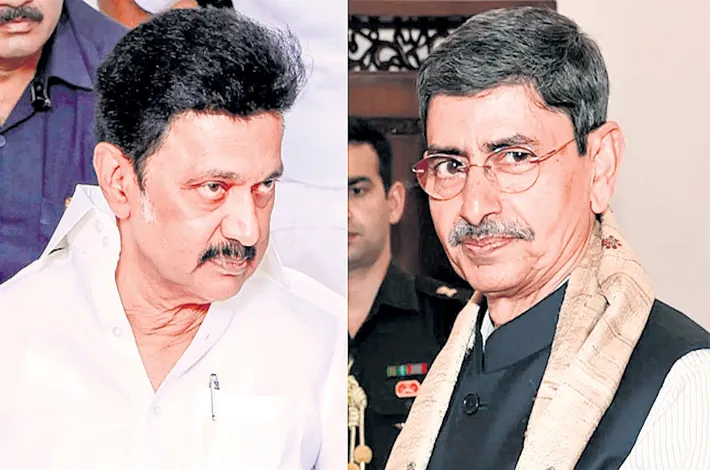
The ongoing political confrontation between Tamil Nadu Governor R.N. Ravi and Chief Minister M.K. Stalin escalated dramatically on January 20, 2026, during the opening session of the Tamil Nadu Legislative Assembly. In a scene that has become increasingly familiar, Governor Ravi walked out of the Assembly just minutes after arriving, refusing to deliver the customary address prepared by the state government. He exited the House in under 10 minutes, issuing a detailed press release from Raj Bhavan shortly afterward outlining his reasons for the dramatic departure.
According to the Governor's office, the walkout stemmed from multiple grievances. Chief among them was the alleged insult to the national anthem, as the proceedings began with Tamil Thaai Vaazhthu (the state anthem) rather than the national anthem, which Ravi insisted should precede his address. The press release listed 13 points in total, accusing the DMK-led government of pressuring him to read a speech filled with "highly embellished," misleading, and unsubstantiated claims—such as the assertion that the state had attracted over Rs 12 lakh crore in investments.
Raj Bhavan described many of these investment promises as mere memoranda of understanding that remained on paper, noting that Tamil Nadu's ranking in foreign direct investment had slipped from fourth to sixth among Indian states. The Governor also highlighted critical omissions in the prepared speech, including rising crime rates, drug abuse, and atrocities against Dalits, claiming that when he attempted to address these issues, his microphone was deliberately muted. This incident marked the third or fourth consecutive year—depending on the count of similar episodes—that Governor Ravi has refused to complete or deliver the full customary address, turning what is traditionally a ceremonial event into a flashpoint of constitutional and political tension.
The DMK government and Chief Minister Stalin swiftly dismissed the Governor's actions as pre-planned political theatrics designed to corner the ruling party. They maintained that no insult occurred to the national anthem, which was played as per established protocol at the conclusion of proceedings (though the Governor's early exit altered the sequence). Stalin condemned the walkout as an insult to the dignity of the elected Assembly. The Chief Minister announced intentions to collaborate with like-minded opposition chief ministers from states such as Kerala and West Bengal to push for a constitutional amendment, potentially abolishing or modifying the requirement under Article 176 for the Governor to deliver an address at the start of legislative sessions.
A DMK representative described Governor Ravi as “unworthy” of occupying a high constitutional office, alleging he had pre-scripted a dramatic exit to avoid reading the government's achievements and to portray the INDIA alliance as anti-people. They argued that the Governor's role is ceremonial—he must read the address prepared by the elected government—and that any flaws in the speech should be debated by the opposition in the House, not pre-emptively rejected by the Governor acting as an unelected "leader of opposition."
In contrast, a Tamil Nadu BJP spokesperson defended the Governor asserting that he cannot be forced to mouth falsehoods or the ruling party's narrative. He emphasized respect for the constitutional head, noting that traditions vary but the national anthem deserves primacy. He further accused the DMK of deliberately provoking the Governor to mask governance failures, corruption and misadministration.
Senior journalist Raj Gopalan provided historical context, pointing out that governors have been used as political tools across regimes—not just by the BJP but also during Congress and other governments. He noted prolonged correspondence between the finance ministry and Raj Bhavan over the speech content, with the Governor seeking to include issues like corruption, murders, and drug abuse that he witnesses during statewide visits.
The whole episode highlighted recurring questions about the Governor's role in India's federal structure. Is the office a necessary constitutional check, or has it become a "federal choke" selectively deployed against opposition-ruled states? Critics argue that clashes predominantly occur in non-BJP states, raising concerns about the "tyranny of the unelected" over elected governments. Defenders maintain that Governors, as appointees of the President, have the right—and duty—to uphold constitutional values, refusing to endorse misleading claims even if it means breaking protocol. As Tamil Nadu heads toward election season, this Governor-Chief Minister standoff shows no signs of cooling, with both sides entrenched and accusations flying across party lines. Whether it leads to meaningful constitutional reform or remains a cycle of political theatre remains to be seen.