3 October, 2026 | 9:09 PM


Trump cuts funding for SA, disapproving land policy
09-02-2025 12:00:00 AM
Agencies WASHINGTON
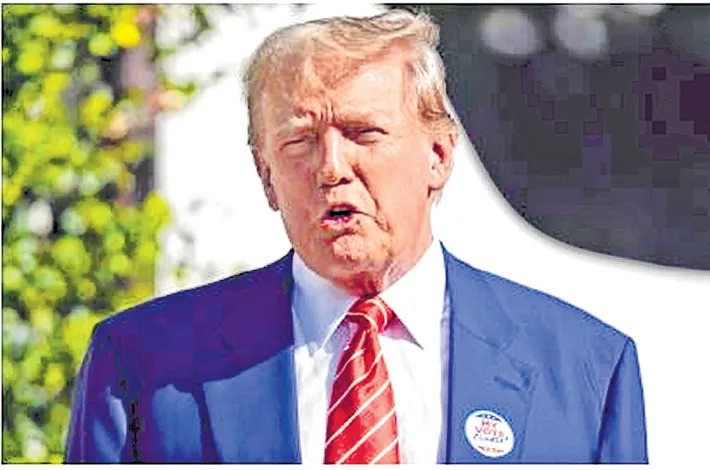
President Donald Trump signed an executive order to cut US financial assistance to South Africa, the White House said on Friday, citing disapproval of its land policy and of its genocide case at the International Court of Justice against Washington's ally, Israel.
The United States allocated nearly $440 million in assistance to South Africa in 2023, the most recent US government data shows. South Africa's foreign ministry said on Saturday the executive order "lacks factual accuracy and fails to recognize South Africa's profound and painful history of colonialism and apartheid".
The White House said Washington will also formulate a plan to resettle white South African farmers and their families as refugees. It said US officials will take steps to prioritize humanitarian relief, including admission and resettlement through the United States Refugee Admissions Programme for Afrikaners in South Africa, who are mostly white descendants of early Dutch and French settlers.
South Africa's foreign ministry said: "It is ironic that the executive order makes provision for refugee status in the US for a group in South Africa that remains amongst the most economically privileged, while vulnerable people in the US from other parts of the world are being deported and denied asylum despite real hardship."
Trump has said, without citing evidence, that "South Africa is confiscating land" and that "certain classes of people" were treated "very badly". South African-born billionaire Elon Musk, who is close to Trump, has said that white South Africans have been the victims of "racist ownership laws”.
South African President Cyril Ramaphosa said South Africa "will not be bullied." He signed into law a bill last month aimed at making it easier for the state to expropriate land in the public interest, has defended the policy. White landowners still possess three-quarters of South Africa's freehold farmland. This contrasts with 4% owned by Black people, who make up 80% of the population compared with about 8% for whites, according to the latest 2017 land audit.