19 October, 2026 | 9:13 AM


Assam CM’s comments on “Miya Muslims” Genuine concern or mere rhetoric?
01-02-2026 12:00:00 AM
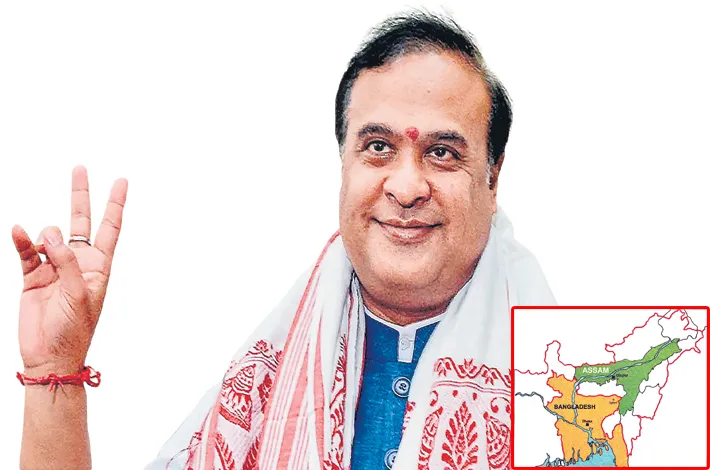
The opposition has labelled these comments as unprecedented and hateful, accusing Sarma and the BJP of polarizing voters along communal lines
In the lead-up to the upcoming elections in Assam, Chief Minister Himanta Biswa Sarma has ignited a firestorm with his pointed statements targeting the Miya Muslim community. Sarma, in the past three days, has escalated his rhetoric against Miya Muslims—Bengali-speaking Muslims who migrated from Bangladesh over the last century and now constitute about 65% of Assam's Muslim population. He has suggested that they should not be allowed to vote in Assam and instead return to Bangladesh to cast their ballots. Sarma even went as far as declaring his role as chief minister is to "trouble" the community so much that they leave the state.
The opposition has labelled these comments as unprecedented and hateful, accusing Sarma and the BJP of polarizing voters along communal lines. In the debate, Sarma defended his use of the term "Miya," noting that the community self-identifies with it through poetry and cultural expressions, and he is merely echoing their own terminology. He urged Assamese people to file complaints using Form 7 to challenge Miya Muslims' voting rights en masse and even advised haggling with Miya rickshaw pullers—paying them Rs 4 instead of Rs 5—to make their lives difficult.
Critics, including Congress leaders, argued that such statements warrant jail time and a ban from contesting elections, emphasizing that targeting an entire community undermines India's constitutional spirit. Historical context played a central role in the discussion. The Miya Muslims' migration dates back over 100 years, with significant influxes during the British Raj and post-partition eras. The Assam Accord of 1985 and the National Register of Citizens (NRC) define anyone entering India before March 25, 1971, as a citizen, regardless of origin.
However, the BJP has invoked fears of demographic shifts, pointing out that Assam's Muslim population has risen from 15% in 1901 to an estimated 40% by 2025. They also highlighted that fewer than 50% of Assamese people now speak Assamese as their primary language, down from 60% in 1971. Home Minister Amit Shah, while in Assam, fully backed Sarma, praising the BJP for halting demographic changes through infiltration and vowing to remove every illegal immigrant if re-elected.
BJP leaders framed the issue as one of illegal immigration rather than religion. They argued that time does not legitimize illegality and that self-identification as "Miya" for political mobilization should not lead to claims of victimhood when echoed by leaders. A party spokesperson clarified local terminology: "Miya" specifically refers to Bangladeshi-origin Muslims, distinct from indigenous "Khilonjia" Muslims who are integral to Assam's fabric. He referenced historical letters between Jawaharlal Nehru and Gopinath Bardoloi, Assam's first chief minister, expressing concerns over Bangladeshi influxes, underscoring that this is a longstanding issue transcended by party lines.
Opposition voices, such as Congress and even pro-Congress political analysts, countered that the BJP is communalizing the debate by focusing solely on Muslim immigrants while ignoring Hindu ones from Bangladesh. A party leader questioned why the term "Miya" is used instead of "illegal migrants," which would encompass both communities, and pointed to districts like Cachar and Hailakandi where Hindu illegal immigrants form majorities.
She accused Sarma of legitimizing Hindu migrants while harassing Muslims, including through laws requiring prior permission for land sales from Hindus to Muslims and complicating interfaith marriages. A political analyst emphasized that "Miya" derives from Persian-Urdu meaning "gentleman" or "sir," and its derogatory use targets Muslims selectively, urging the BJP to address illegal immigration without hypocrisy.
The chief minister has intensified his rhetoric, urging people not to rent homes to "Mias," not to employ them, not to buy from them, and to make them feel uncomfortable in Assam so they leave. Supporters frame this as a pragmatic response to demographic changes caused by illegal immigration, insisting it protects indigenous Assamese people (both Hindu and Muslim) rather than targeting religion. They point to Union Home Minister Amit Shah's claims that seven districts—Dhubri, Barpeta, Darrang, Morigaon, Bongaigaon, Nagaon, and Goalpara—are now dominated by around 64 lakh illegal infiltrators, a figure attributed to unchecked inflows during past Congress regimes. Shah has promised identification and deportation of every illegal immigrant if the BJP wins a third term.
The debate highlighted broader concerns about constitutional rights and national security. Sarma remained unapologetic, insisting that stating reality is not hate speech, while Shah reiterated the BJP's commitment to rooting out infiltrators. Critics warned that inaction by the Election Commission or courts signals an erosion of constitutional values. With elections approaching, the "50-50 fear"—a potential demographic tipping point—looms large, potentially shaping not just Assam but also neighbouring Bengal's political landscape.