19 October, 2026 | 10:08 AM


Of judgements and commercial impacts
01-02-2026 12:00:00 AM
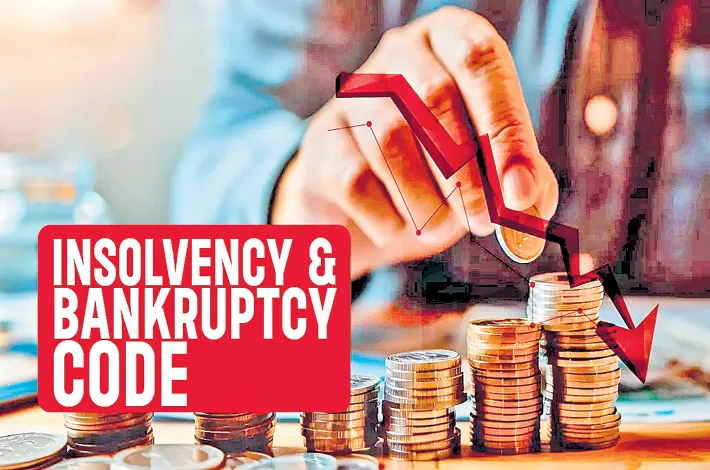
The economic impact of judicial decisions in commercial debt-related matters is a critical yet often under-discussed aspect of India's legal landscape. Courts routinely handle cases with massive financial stakes, particularly in banking, lending, and insolvency proceedings. These rulings extend well beyond the immediate parties, influencing the broader economy, credit availability, investment climate, and growth trajectories.
A foundational insight comes from Justice A.K. Sikri's landmark judgment in Shivashakti Sugars Ltd. v. Shree Renuka Sugar Ltd. (2017), where he observed that judicial interventions in commercial and financial disputes frequently function as implicit economic policy decisions, with repercussions far exceeding the litigants involved. This profound remark underscores how court rulings can shape economic outcomes in profound ways.
A former Supreme Court judge and now an arbitrator emphasized the judiciary's vital role alongside the legislature and executive in fostering national economic growth—especially as India targets becoming a $5 trillion economy and potentially the world's third-largest. He stressed that economic legislation and policies must be growth-oriented. When adjudicating disputes involving large loans, defaults, Debt Recovery Tribunals (DRT), or the Insolvency and Bankruptcy Code (IBC), courts must apply the law rigorously while avoiding becoming roadblocks to progress.
He highlighted the evolution of justice theories, including the economic analysis of law (championed by figures like Judge Richard Posner), which calls for considering economic principles to achieve fair outcomes. Courts' primary duty remains applying the law, but within discretionary interpretation—such as purposive construction—they can factor in economic consequences where legal provisions allow. The key is balance: neither ignoring law for economic expediency nor disregarding systemic impacts. He also advocated consciously weighing economic principles in relevant cases to support national development.
A senior Supreme Court advocate noted the dynamic evolution of economic legislation—from the Sick Industrial Companies Act to DRT and now IBC, which remains a work in progress with frequent Supreme Court interventions clarifying provisions and balancing stakeholder interests (banks seeking swift recovery, resolution applicants needing timely closure, borrowers with legitimate rights, and workers/factories). He pointed out that every judicial decision carries huge financial ripple effects: prolonged litigation or stays can deter resolution applicants, unsettle workers, alter company viability, and hinder industrial progress. Courts must safeguard public interest, revenue recovery, and broader economic goals.
From the banking perspective, a former Chairman of a PSU bank underscored the judiciary's growing influence on banking operations—often surpassing even the RBI as the most impactful "regulator" in lending, recovery, consumer protection, and infrastructure financing. Banks rely on courts for fairness and guidance in an increasingly financialized economy. He praised detailed judicial reasoning as a learning tool for better internal policies.
Addressing Asset Reconstruction Companies (ARCs), he described them as a timely innovation (regulated by RBI, unlike in many countries) to relieve banks of non-performing assets (NPAs), enabling focus on core lending while ARCs pursue reconstruction or recovery. Though a work in progress—with some instances of regulatory arbitrage—the mechanism's benefits outweigh drawbacks, building specialized talent for revival (aligning with IBC's creditor-driven, resolution-focused approach). He clarified that ARCs cannot provide high-value professional services charitably; they must earn reasonable profits to survive.
Another retired DRT judge reinforced ARCs' necessity for company reconstruction over easy liquidation, which often yields minimal recovery for creditors (including workers and government dues). The IBC, he mentioned prioritizes revival to preserve production, services, and jobs—benefiting the economy. Malpractices by some ARCs should prompt reforms and stricter oversight, not abolition. He opined that judges should adopt a "carrot and stick" approach: reward honest turnaround efforts with fair remuneration, but penalize greed or misconduct decisively to send a clear message.
Another senior advocate specializing in debt related cases agreed that ARCs originated with bona fide intent—allowing banks to offload bad debts for specialized handling—but malpractices have risen, including ARCs acting as fronts for borrowers or resolution applicants in structured deals to circumvent rules or enable backdoor acquisitions. Courts now scrutinize transactions rigorously to prevent public money loss (e.g., huge haircuts benefiting private entities unduly). He advocated for stronger regulation, transparent bank decision-making on debt assignments, and checks on funding sources are essential to balance legitimate ARC profits with public interest safeguards.
An inherent judicial dilemma was acknowledged—balancing equity/fairness (rooted in common law, constitutional social justice) against efficiency and economic realities—especially in high-stakes commercial matters. He advocated tools like Article 142 powers, proportionality and prospective overruling to mitigate harsh economic fallout while upholding legality. The discussion highlighted the judiciary's exalted, independent role as the ultimate arbiter for honest bankers, while urging ongoing engagement with economic developments to support India's growth ambitions. The conversation is set to continue in greater depth in a follow-up segment.