12 October, 2026 | 3:31 PM


‘Cost, scale, resilience to decide India’s global business leadership’
19-01-2026 12:00:00 AM
Metro India News | davos
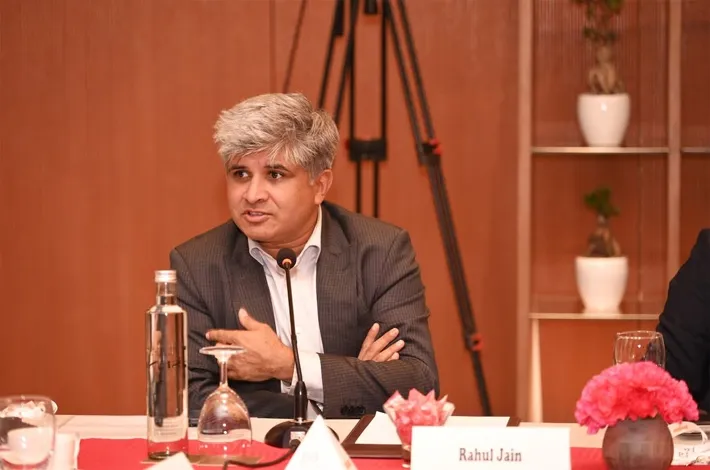
As India makes a strong presence at the World Economic Forum Annual Meeting here, Boston Consulting Group (BCG) India Head Rahul Jain said the key takeaway for Indian businesses is clear — future competitiveness will come from a combination of cost efficiency, scale and resilience.
Speaking to PTI on the sidelines of the summit, Jain said India is firmly on track to become the world’s third-largest economy by around 2030, with discussions at Davos also focusing on whether this milestone can be achieved as early as 2028. He noted that faster growth would depend heavily on accelerating manufacturing from the current 15–17 per cent of GDP to 20 per cent and beyond.
Jain highlighted that investments in sunrise sectors such as clean energy, electronics and semiconductors are creating new growth engines, while scaling electronics, auto components, renewable hardware, data centres and the semiconductor ecosystem can further integrate India into global value chains.
He said geopolitics is now reshaping trade and supply chains as much as economics, with tariffs, export controls and regional blocs driving a shift from “just-in-time” to “just-in-case” supply chains. In this environment, resilience has become as critical as efficiency.
India’s steady 6–7 per cent growth, well above the global average, is supported by strong domestic demand, rising incomes, formalisation and public investment, he said, adding that limited export dependence helps absorb global shocks.
On artificial intelligence, Jain said AI will be central to India’s next growth phase, driving productivity across sectors. He added that sustainability goals, including emissions reduction and non-fossil capacity expansion, are turning climate ambition into a major industrial opportunity for India.