12 October, 2026 | 2:36 PM


India-EU FTA to power export surge in textiles, pharma, engineering
18-01-2026 12:00:00 AM
Apparel Export Promotion Council Chairman A Sakthivel said the FTA would help reduce India’s dependence on any single export destination. With higher tariffs imposed by the United States making Indian goods less competitive there, exporters are increasingly looking to diversify markets, and the EU presents a strong alternative.
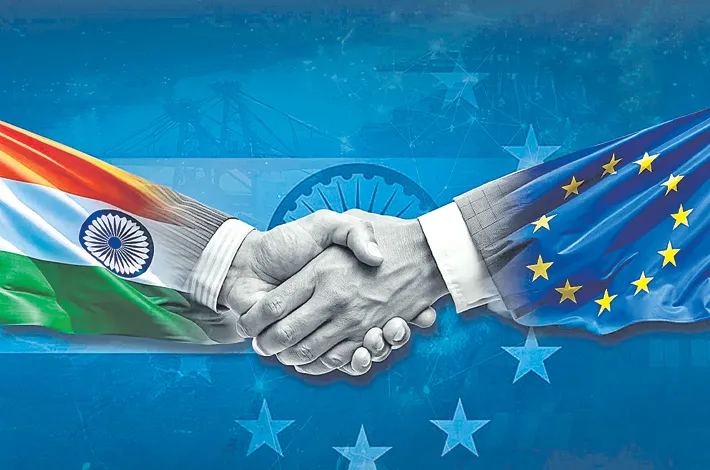
India’s export-driven sectors such as textiles, pharmaceuticals, chemicals, engineering goods, gems and jewellery are expected to receive a significant boost from the proposed free trade agreement (FTA) between India and the European Union, exporters said. The conclusion of negotiations for the pact with the 27-nation EU is likely to be announced on January 27, raising strong expectations within the industry.
Export bodies estimate that once tariffs are phased out under the FTA, India’s exports to the EU could double over the next three years. They believe the agreement will provide a stable and predictable trade framework, enabling Indian companies to plan long-term investments, integrate into European value chains and secure sustained market access amid global economic uncertainties.
Apparel Export Promotion Council Chairman A Sakthivel said the FTA would help reduce India’s dependence on any single export destination. With higher tariffs imposed by the United States making Indian goods less competitive there, exporters are increasingly looking to diversify markets, and the EU presents a strong alternative. He added that negotiations have focused on sectors where India already has a strong footprint, including textiles, apparel, pharmaceuticals, engineering goods, petroleum products and chemicals.
Currently, textiles and apparel attract import duties of 12–16 per cent in the EU, reducing competitiveness. While India enjoys some relief under the EU’s Generalised Scheme of Preferences, exporters say the FTA could eliminate these duties altogether, significantly improving price competitiveness. Leather exporters are also optimistic, with industry leaders calling the agreement a major opportunity to scale up shipments.
The Federation of Indian Export Organisations noted that rising US tariffs are impacting a wide range of Indian exports, making market diversification essential. In this context, it said, a comprehensive India-EU FTA is both timely and strategically important. The EU accounts for nearly 17 per cent of India’s goods exports and a substantial share of services trade.
FIEO Director General Ajay Sahai said reducing tariff and non-tariff barriers with the EU would help offset pressure from other markets. He added that Indian generics, speciality chemicals, engineering goods and electrical machinery would gain competitiveness, while gems, jewellery, petroleum products, iron and steel would benefit from improved market access. Services such as IT, legal, consulting, accounting and management are also expected to see gains.
Bilateral goods trade between India and the EU stood at about USD 136.5 billion in 2024–25, with India’s exports valued at nearly USD 75.8 billion, underlining the importance of the proposed pact.