21 October, 2026 | 5:15 AM


Pulling the youth vote- BJP vis-à-vis Congress
23-01-2026 12:00:00 AM
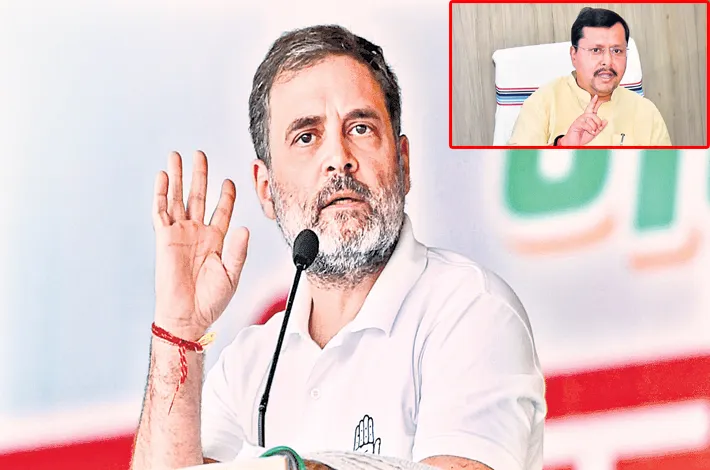
Until recently, Nitin Nabin was relatively unknown to most Indians. However, his appointment as the president of the Bharatiya Janata Party (BJP) marks a significant milestone. At 45 years old, Nabin becomes the youngest leader to helm the world's largest political party. This transition, set to occur on a Tuesday morning, is more than a routine change; it signals a deliberate generational shift within the BJP. Unlike the high-profile rebrandings seen in other parties, the BJP's approach is understated, focusing on substance over spectacle.
As India enters a pivotal election year in 2026, the youth vote—larger than ever—remains central. Parties are vying for this demographic, evident in Tamil Nadu where actor Vijay's entry has become a hot topic, with even Congress seeking his support. The BJP positions itself as attuned to youth aspirations, claiming no greater rallying point than 75-year-old Prime Minister Narendra Modi. Data from the 2024 Lok Sabha elections underscores this: 39% of voters aged 18-25 supported the BJP, compared to 21% for Congress. In the 26-35 age group, it was 37% for BJP versus 21% for Congress, and 34% versus 22% for 35-45. Historical trends show the BJP's youth support surging from 20% in 2009 to around 40% by 2019, while Congress has stagnated at about 20%.
Nabin, a five-time MLA from Bihar and son of a late BJP veteran, has deep ties to the Rashtriya Swayamsevak Sangh (RSS). He succeeds JP Nadda, who served since January 2020 through multiple extensions. His nomination, endorsed by senior leaders, reflects unity within the BJP as it gears up for elections in West Bengal, Tamil Nadu, Kerala, Assam, and Puducherry this year, followed by Uttar Pradesh, Manipur, Punjab, Goa, Himachal Pradesh, Uttarakhand, and Gujarat in 2027. Nabin has already engaged in preparations, visiting Tamil Nadu for Pongal celebrations and Assam amid tough competition.
A senior news editor noted that while the process isn't strictly democratic—relying on consensus rather than contested elections—it highlights the BJP's systematic generational shift. She emphasized the party's focus on understanding and channeling Gen Z's concerns through democratic processes, avoiding unrest seen in places like Nepal and Sri Lanka. A BJP spokesperson hailed the appointment as historic, crediting Prime Minister Modi's vision for engaging youth positively. He contrasted the BJP's merit-based rise—from booth workers to presidents—with Congress's "parivar shift," where control remains familial. Bandari argued that the BJP attracts aspirational youth through policies like startup facilitation and aims for "Viksit Bharat 2047" powered by "yuva shakti."
A political analyst however defended Rahul Gandhi's approach, arguing it addresses substantive issues like unemployment, paper leaks, and joblessness, resonating beyond urban Gen Z to rural and working-class youth. She questioned the BJP's "cosmetic politics" and dismissed criticisms of Gandhi's labels like "Thalaiva" (meaning leader in Tamil), comparing them to Modi's nicknames. She stressed that while organizational strengthening is needed in Congress, Gandhi's focus on real issues offers a slower but genuine translation into support.
Another senior journalist downplayed the appointment's substance, viewing it as high on optics but low on impact, given that true leadership lies with Modi and Amit Shah, not the party president. He argued age is irrelevant in Indian politics, citing historical examples where youth didn't guarantee votes. He emphasized that voters respond to a "package" of cultural nationalism, identity, and economic growth offered by Modi, which Gandhi lacks. He rejected direct links between organizational strength and electoral success, pointing to Congress talents like Gaurav Gogoi and Sachin Pilot who could make a difference if projected properly.
This whole discussion also highlighted the opposition's struggles. With the INDIA alliance fractured—leaders like Mamata Banerjee focused on Bengal, Tejashwi Yadav recovering in Bihar, and Akhilesh Yadav on Uttar Pradesh—unity seems elusive. However, it was by and large agreed that Congress's reliance on central branding ignores grassroots decay, with local units often inactive. In contrast, the BJP's well-oiled machinery ensures year-round mobilization, translating promises into action. Politicians across parties stressed that branding must align with reality giving instances when historical figures like Rajiv Gandhi and VP Singh saw their images crash without strong structures. The journalist noted Tamil Nadu's Youth Congress has more members than votes polled, but without active engagement, it fails.
As 2026 unfolds with high-stakes elections, the BJP's dominance in the youth vote—double that of Congress—poses tough questions. Why has Rahul Gandhi, despite consistent youth-focused branding, failed to enthuse voters after three national losses? Can the opposition offer a viable alternative vision? Introspection is crucial, as elections demand wins, not just issues. The BJP's quiet strategy, exemplified by Nabin, affirms its youth-centric focus in a landscape dominated by older leaders.