19 October, 2026 | 4:03 PM


Padma Honours Coincidence or Calculation?
28-01-2026 12:00:00 AM
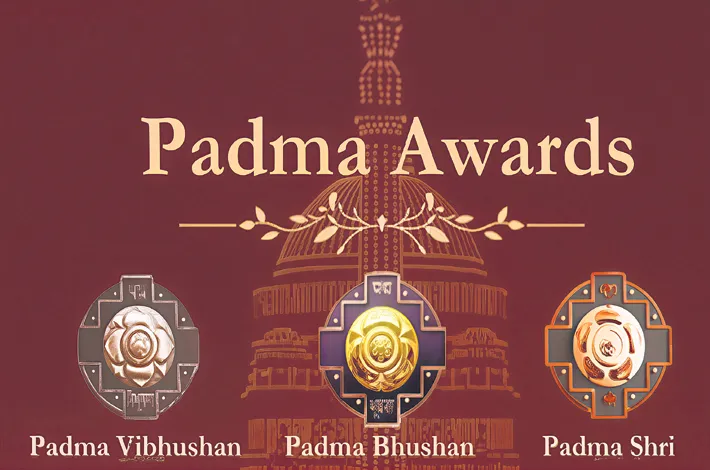
The announcement of the Padma Awards 2026 on January 25, ahead of Republic Day, has once again triggered a familiar political storm. While the government projects the honours as a celebration of excellence and grassroots contribution, the opposition alleges calculated timing, regional skew and creeping politicisation of one of India’s highest civilian award systems.
This year, 131 individuals were conferred Padma honours — 5 Padma Vibhushan, 13 Padma Bhushan and 113 Padma Shri. The list includes 19 women, six foreign nationals or persons of Indian origin abroad, and 16 posthumous awardees. Recipients span a wide spectrum, from arts and literature to medicine, sports, public affairs and social service, blending celebrated national figures with lesser-known contributors working at the grassroots.
Among the Padma Vibhushan awardees were veteran actor Dharmendra Singh Deol (posthumous) for Art, former Supreme Court judge Justice K.T. Thomas for Public Affairs, legendary violinist N. Rajam for Art, and educationist-writer P. Narayanan. The Padma Bhushan list featured Malayalam cinema icon Mammootty, former Jharkhand Chief Minister Shibu Soren (posthumous), singer Alka Yagnik, tennis legend Vijay Amritraj and others. The Padma Shri category recognised numerous unsung contributors, including sanitation workers, craftsmen, tribal welfare activists and folk artists.
The controversy, however, erupted over the regional distribution of awards. Southern states figured prominently, with Tamil Nadu receiving around 13 awards, Kerala about eight — including three Padma Vibhushan — and West Bengal around 11. Together, these states accounted for nearly 37–40 percent of the total honours. Since several of these states are poll-bound or politically sensitive, opposition leaders claimed the distribution raised legitimate concerns.
Congress leader Praveen Chakravarty and MP Karti Chidambaram argued that the awards were being strategically timed to influence voters. INDIA bloc leaders echoed the charge, accusing the BJP-led NDA government of politicising neutral institutions, comparing the Padma awards controversy to alleged misuse of agencies such as the ED, CBI and Income Tax Department.
Certain awards drew sharper criticism. The Padma Bhushan to former Maharashtra Governor Bhagat Singh Koshyari triggered backlash, with opposition parties alleging he was being rewarded despite accusations of undermining democratic norms in the state. Questions were also raised over the Padma Bhushan to Shibu Soren, with some arguing that his stature merited a Bharat Ratna instead. The Padma Shri awarded to RVS Mani reopened debates around his past claims of coercion under a previous regime related to affidavits on the “saffron terrorism” issue.
Opposition leaders insisted their objection was not to individual merit but to timing. They argued that figures like Mammootty or former Kerala Chief Minister V.S. Achuthanandan, awarded the Padma Vibhushan posthumously, could have been honoured in a non-election year. According to critics, announcing awards close to elections in Kerala, Tamil Nadu and West Bengal invites suspicion and politicises otherwise deserving recognitions. Some political analysts also described the timing as a self-inflicted problem for the government. They argued that many awardees were equally deserving last year, and the electoral overlap undermines the prestige of the honours. One analyst remarked that recipients might feel “used” politically, even if they are apolitical, and criticised the government for failing to anticipate predictable backlash.
The BJP responded aggressively, branding the honours as the “People’s Padma.” Party spokespersons highlighted reforms introduced under Prime Minister Narendra Modi, including open citizen nominations and selection committees comprising civil servants, doctors, scientists, artists and administrators from across the country. They claimed the process marked a shift from what they described as an opaque, patronage-driven system under previous Congress-led governments. Rejecting accusations of appeasement, the BJP pointed out that recipients such as Mammootty have no ideological alignment with the party. They also argued that grassroots awardees in sanitation or tribal welfare are unlikely to influence electoral outcomes. To counter claims of regional bias, the party cited Maharashtra — a non-poll-bound state — which led with around 15 awards, followed by Uttar Pradesh with about 11 and Telangana with seven.
Congress spokespersons, however, cited other controversial names, including Vellappally Natesan, accused of making hate speeches against Muslims. They drew parallels with earlier awardees such as Sadhvi Ritambhara in 2022 and Kartik Maharaj the following year, both of whom faced serious allegations. The Congress questioned whether awards were being used to appeal to specific communities, pointing to honours given to figures linked to the Ezhava community in Kerala. They also noted that V.S. Achuthanandan, known for his ideological rigidity, would likely have rejected the award if alive.
A senior journalist offered a counter-view, shifting focus to the increasing recognition of unsung heroes. He cited individuals like Inderjit Singh from Chandigarh, who continued his cleanliness drive even after receiving a Padma award, as evidence of a shift toward recognising service over status. He dismissed opposition criticism as “lazy analysis,” noting substantial award counts from non-poll-bound states.
Adding to the debate, a pro-Congress analyst questioned the logic of honouring leaders like Shibu Soren and Sharad Pawar after the BJP had previously levelled serious charges against them. He demanded apologies if they were now deemed deserving and hinted at future honours for other rivals. BJP representatives countered by reiterating that the selection process is ideology-neutral and praised the NDA for honouring merit across political lines.
Ultimately, the Padma Awards 2026 reflect both an evolving recognition of excellence and India’s deep political distrust. Whether the controversy influences voters remains uncertain, but it has ensured that this year’s honours are debated as intensely for politics as for prestige.